What is the MIND diet?
Updated from original article published April 11, 2022
The MIND Diet Explained
The MIND diet stands for the Mediterranean-DASH Intervention for Neurodegenerative Delay. This diet aims to reduce dementia and the decline in brain health that often occurs as people age. It combines aspects of two well-researched diets, the Mediterranean Diet and Dietary Approaches to Stop Hypertension (DASH).
Note: Patients with coronary artery disease, kidney disease, and diabetes should consult their medical doctors and nutritionists prior to beginning any new diet as those conditions have other dietary restrictions or priorities.
What food can you eat on the MIND diet?
The MIND diet emphasizes a variety of nutrient-rich foods that have been associated with better brain health. Key recommendations include:
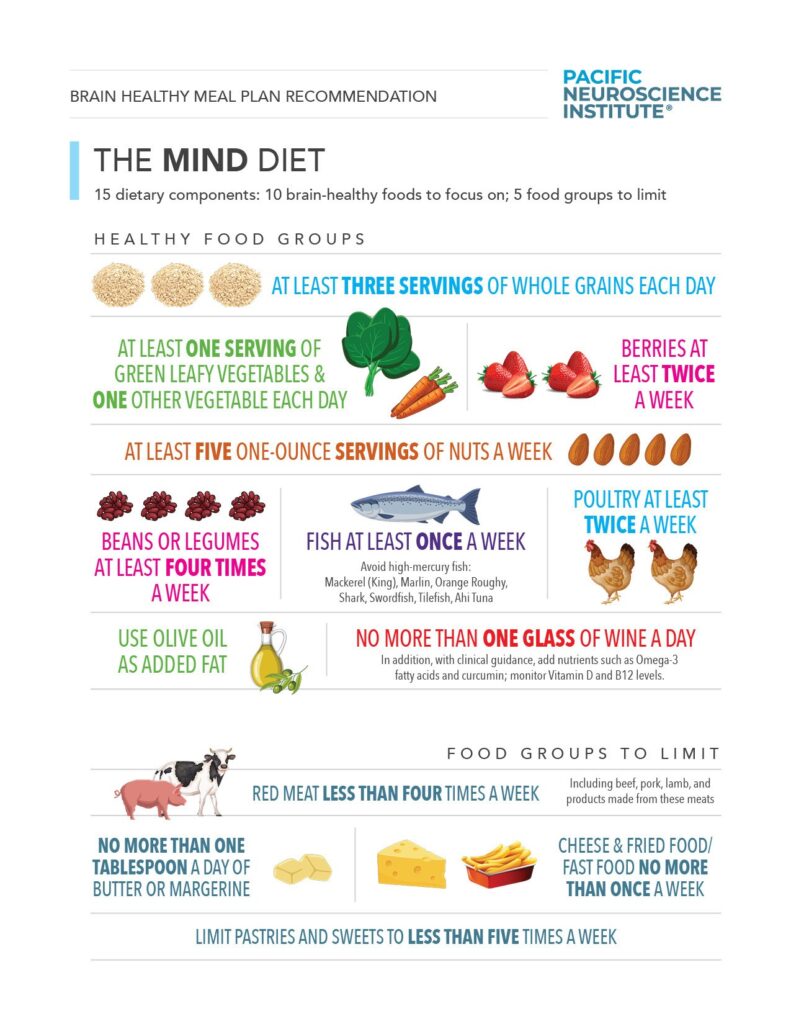
- Green leafy vegetables: Aim for at least six servings each week. This includes vegetables such as spinach, kale, collard greens, and leafy salads, which are rich in vitamins, minerals, and antioxidants.
- Other vegetables: Enjoy at least one additional serving of vegetables every day. Focus on non-starchy vegetables, which provide plenty of nutrients while being naturally lower in calories.
- Berries: Eat berries at least twice a week. Blueberries, strawberries, raspberries, and blackberries are particularly valued for their antioxidant properties, which may help protect brain cells from oxidative stress.
- Nuts: Include five or more servings of nuts each week. Since different nuts offer different nutrients, choosing a variety can help maximize their health benefits.
- Olive oil: Use extra virgin olive oil as your primary cooking oil and for salad dressings whenever possible. It is a key source of heart-healthy monounsaturated fats.
- Whole grains: Aim for at least three servings each day. Good choices include oatmeal, quinoa, brown rice, whole wheat bread, and whole wheat pasta.
- Seafood: Eat fish at least once a week, with an emphasis on fatty fish such as salmon, trout, sardines, tuna, and mackerel, which are excellent sources of omega-3 fatty acids.
- Beans and legumes: Incorporate beans, lentils, chickpeas, or soybeans into at least four meals each week. These foods provide plant-based protein, fiber, and essential nutrients.
- Poultry: Include chicken or turkey in at least two meals per week. Choose grilled, baked, or roasted preparations rather than fried options.
For practical, everyday ways to work these foods in, see our companion guide from PNI’s brain health dietitian.
A Note About Alcohol: Wine was originally included as one of the 15 components of the MIND diet because moderate consumption was associated with better cognitive health in early research. However, more recent MIND diet studies have removed wine from the dietary score due to safety considerations. Because the effects of alcohol can vary widely from person to person based on factors such as age, health, medications, and individual risk, there is no universal recommendation to drink alcohol for brain health.
For people with Parkinson’s disease: Because this diet has not been studied in Parkinson’s disease, where patients may have balance issues, which could worsen with alcohol, we do not recommend a daily glass of wine for PD patients. The supplement Resveratrol may be taken instead.
Fish Intake Guidelines
Regarding fish intake, we recommend avoiding high-mercury fish:
- King Mackerel
- Marlin
- Orange Roughy
- Shark
- Swordfish
- Tilefish
- Ahi Tuna (albacore tuna has lower mercury content and can be had once a week).
Mercury content information can be found on the EPA website.
We recommend fatty fish like salmon, sardines, trout, and albacore tuna for their high amounts of omega-3 fatty acids.
Foods to Limit on the MIND Diet
The MIND diet encourages reducing foods that are higher in saturated fat, added sugars, and processed ingredients. While these foods don’t have to be eliminated entirely, they should be enjoyed in moderation.
- Butter and margarine: Limit butter and margarine to less than one tablespoon per day. Instead, use extra virgin olive oil as your primary cooking fat or drizzle it over bread with herbs for added flavor.
- Cheese: Enjoy cheese sparingly, aiming for less than one serving per week.
- Red meat: Limit beef, pork, lamb, and processed meats to no more than three servings per week. Consider replacing red meat with fish, poultry, or plant-based proteins when possible.
- Fried foods: Minimize fried foods, particularly those from fast-food restaurants, and limit them to less than one serving per week.
- Pastries and sweets: Foods such as cookies, cakes, brownies, donuts, candy, ice cream, and other sugary desserts should be limited to no more than four servings per week.
Our recommendations are more flexible than the strict limitations of cheese and butter, however, we do recommend limiting excess sugars and processed foods.
We believe that the optimal diet would be for the patient to enjoy high-quality food of limited quantity, even on occasion rich foods or pastries, rather than having high quantities of low quality, processed foods such as diet or fat-free versions of food, which typically have higher sugar content or may use more chemicals to substitute for flavor.
For example, dark chocolate is known to have anti-oxidant qualities so a small amount (an ounce for example) of good quality chocolate, enjoyed with thoughtfulness, would be better than abstaining altogether or attempting to abstain and then breaking a diet with binges of low-quality chocolate.
A note for people with Parkinson’s disease: Because this diet has not been studied in Parkinson’s disease, where patients may have balance issues, which could worsen with alcohol, we do not recommend a daily glass of wine for PD patients. The supplement resveratrol may be taken instead.
What is the link between the diet and the brain?
Diets high in saturated fat, sugar, and refined carbohydrates are associated with worse cognitive function and increased dementia risk. Alternatively, diets characterized by high intakes of vegetables and fruit, limited meat consumption, and the use of olive oil as a primary dietary fat are associated with decreased risk of dementia and other cognitive diseases.
The MIND diet was developed to support long-term brain health and help reduce the risk of age-related cognitive decline and dementia. By emphasizing nutrient-rich foods such as leafy greens, berries, whole grains, fish, beans, nuts, olive oil, and poultry, the diet provides antioxidants, healthy fats, vitamins, and other compounds that may help protect the brain by reducing inflammation and oxidative stress.
While research is still ongoing, studies suggest that people who follow the MIND diet may have a lower risk of developing Alzheimer’s disease and experience slower cognitive decline over time. Combined with regular physical activity, quality sleep, social engagement, and other healthy lifestyle habits, the MIND diet offers a practical and sustainable approach to supporting lifelong brain health.
To learn more about our nutrition services, join our mailing list or make an appointment .
LIFESTYLE@PACIFICNEURO.ORG
PHONE: 213-344-2037
Sign up for the Brain Wellness & Lifestyle Newsletter to receive nutrition recommendations each month.
Frequently Asked Questions
Is the MIND diet the same as the Mediterranean diet?
No. The MIND diet combines elements of the Mediterranean diet and the DASH diet, with an added focus on foods most closely linked to dementia prevention, such as leafy greens and berries. The Mediterranean diet has a broader scope; the MIND diet narrows in on brain-specific research.
Do I need to drink wine to follow the MIND diet?
No. Wine was part of the original MIND diet scoring, but more recent studies have removed it due to safety considerations, and there is no universal recommendation to drink alcohol for brain health. This is especially true for people with Parkinson’s disease, for whom alcohol is not recommended.
Can the MIND diet help prevent Alzheimer’s disease?
Research suggests that people who closely follow the MIND diet may have a lower risk of developing Alzheimer’s disease and may experience slower cognitive decline. It is not a guaranteed prevention method, but one part of a broader brain-healthy lifestyle.
What fish should I avoid on the MIND diet?
Avoid high-mercury fish such as king mackerel, marlin, orange roughy, shark, swordfish, and tilefish. Ahi tuna is also high in mercury; albacore tuna is lower and can be eaten about once a week.
How strict do I need to be with the MIND diet?
PNI’s recommendations are flexible rather than all-or-nothing. The goal is a consistent overall pattern, high-quality food in reasonable amounts, rather than eliminating every less-ideal food.
Where can I get personalized MIND diet guidance?
PNI’s Brain Wellness & Lifestyle program offers one-on-one and group nutrition coaching led by a registered dietitian who specializes in brain health, available in person in Santa Monica or virtually.
About the Brain Wellness & Lifestyle Program
The Brain Wellness and Lifestyle program at Pacific Neuroscience Institute® offers personalized guidance to optimize your brain health. Focusing on the 6 pillars, our program addresses diet, exercise, sleep, stress, social interaction, and most importantly memory/cognitive concerns.
Courses blend evidence-based lifestyle interventions with holistic care, offering comprehensive support for your brain health. Backed by strong research, our methods have been specifically designed to empower individuals to take control of their cognitive well-being. Courses are available in-person or virtual, as well as group or individual sessions.
If you’d like support putting these recommendations into practice, PNI offers one-on-one nutrition coaching with our dietitian.
Useful Links
About the Author