
Professional Spotlight: Dr. Noa Tal
Taking a Holistic View with Endocrinology
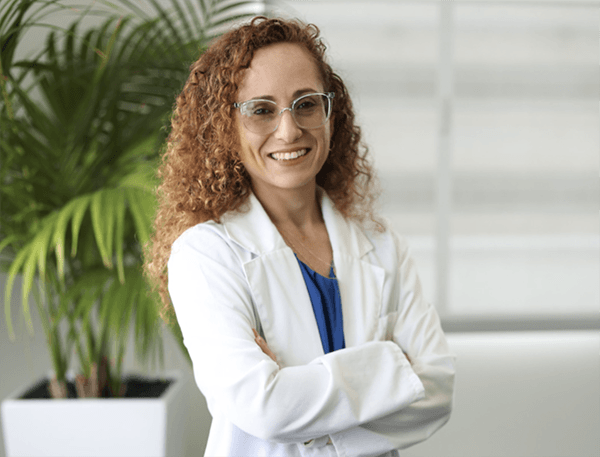
Noa Tal, MD, is a neuroendocrinologist with the Pituitary Disorders Center at Pacific Neuroscience Institute in Santa Monica, California. Dr. Tal graduated from medical school at Tel Aviv University School of Medicine. She did a residency in internal medicine at Montefiore Medical Center in the Bronx in New York. Later she completed a fellowship in endocrinology at Cedars-Sinai Medical Center in Los Angeles, California. Her research focuses on improving the understanding of clinical outcomes in patients with pituitary disorders, with particular emphasis on long-term outcomes and quality of life.
She sat down with the Pituitary Network Association (PNA) for an in-depth interview. Her answers follow.
What is your current position?
I’m a neuroendocrinologist working at Pacific Neuroscience Institute at Providence Saint John’s Health Center in Santa Monica. I see patients with pituitary-related disorders both in the outpatient setting for follow-up visits and in the hospital when they are undergoing surgery.
Tell us about your education.
I completed my undergraduate studies in neuroscience at Bar-Ilan University near Tel Aviv, where I met my husband. I then attended medical school at Tel Aviv University. My husband later pursued postdoctoral research in neuroscience at Columbia University, which led us to move to the United States. I completed my internal medicine residency at Montefiore Medical Center in New York, followed by an endocrinology fellowship at Cedars-Sinai in Los Angeles.
Who would you say are your mentors? What kind of effect did they have on you?
One of the most important mentors in my training has been Dr. Odelia Cooper, who was the program director of the endocrinology fellowship at Cedars-Sinai. She has a strong focus on pituitary disorders, and I deeply admire her dedication to patient care, education, and research. She is incredibly knowledgeable, and whenever questions arose, it was very important to her that we read about them and fully understand the topic so that we could provide the best possible care for our patients.
Another mentor who had a major influence on me is Dr. Vivien Bonert, also an endocrinologist at Cedars-Sinai. She is an extraordinary physician who truly connects with her patients. It is clear how much she cares about them and how well she knows them personally. Watching the way she interacts with patients had a significant impact on me. She understands that caring for a patient is not just about reviewing lab results. She takes the time to understand what is happening in her patients’ lives, ensuring that her care is thoughtful, holistic, and truly patient-centered.
What would you like people to know about your practice?
I mainly treat patients with pituitary disorders, though I also see patients with a broad range of general endocrinology conditions.
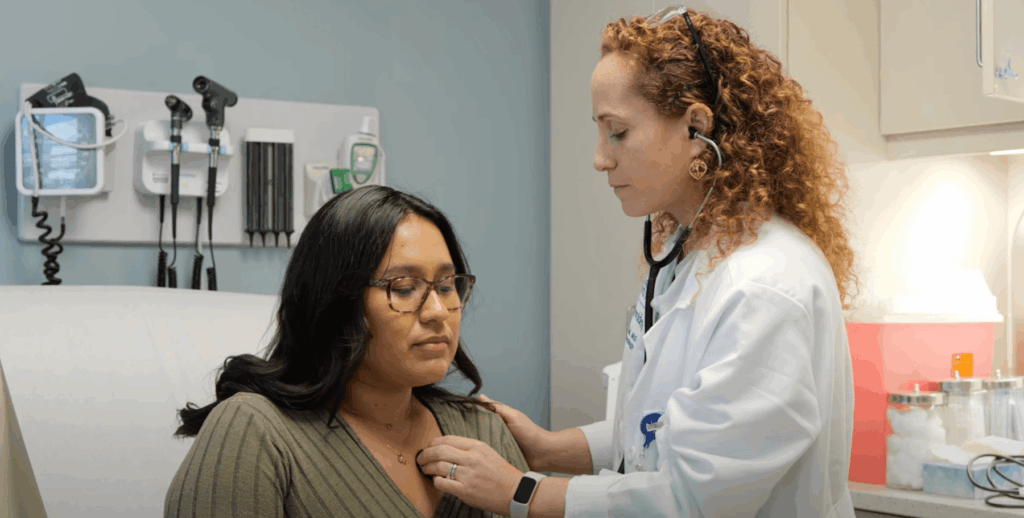
In my practice, I try to incorporate a holistic approach to care while following established guidelines.
I make sure to ask about lifestyle factors such as nutrition, exercise habits, and family support, and I try to integrate lifestyle guidance into the treatment of pituitary-related conditions whenever possible.
Rather than focusing only on lab results or the diagnosis itself, I try to focus on the person sitting in front of me. I’m not just looking at a disease, I’m caring for a person who happens to be living with a medical condition.
How does this holistic approach help patients?
In Western medicine, and in the way many of us were trained, physicians are often limited in addressing symptoms that are not clearly reflected in laboratory results. Many patients experience issues such as poor sleep, digestive problems, depression, or anxiety. They often come to my office for a hormonal evaluation because they feel they have a hormonal imbalance.
Of course, I evaluate hormone levels such as cortisol and thyroid function. When these results are normal, there is no medical indication to treating them. For example, I cannot prescribe hydrocortisone or diagnose hypercortisolism without appropriate findings. However, that does not mean the patient’s symptoms are not real or that nothing can be done.
Often, there are other aspects of a patient’s lifestyle or overall well-being that may contribute to how they feel. I try to listen carefully to each patient’s story to understand whether there are factors in their daily life that may be related to their symptoms, sometimes things they may not have realized were connected.
Have you noticed any trends in whether people are getting diagnosed earlier these days compared to 20 years ago?
Yes, I think there are two main factors. One is that people are increasingly aware of pituitary-related conditions, especially Cushing’s disease. As a result, more patients are coming in and asking to be evaluated for possible hormonal disorders. This awareness is important and legitimate, as these conditions do occur, and we should certainly consider them. In fact, I have had patients who presented this way and were ultimately diagnosed with conditions such as hypercortisolism or hyperthyroidism.
Another factor is the increasing number of incidental findings on imaging. Many patients are referred after a CT scan or brain MRI reveals an incidental pituitary adenoma or another lesion, which then requires further evaluation.
What do you see as the future of endocrinology? Where is it going? What should people be on the lookout for going forward?
There are many new treatments emerging, and it will be important to ensure that these therapies are aligned not only with biochemical targets but also with patient symptoms and overall outcomes. Many newer medications are designed to be more convenient for patients. For example, longer-acting therapies that reduce the need for frequent daily injections or multiple pills. This can significantly improve adherence and make treatment less burdensome in daily life.
Another area that is evolving is the way we make diagnoses. For instance, in the evaluation of hypercortisolism, there is increasing research on late-night salivary cortisone as an alternative to late-night salivary cortisol. Cortisone measurements may more closely reflect the true circulating cortisol levels in the body, which could improve diagnostic accuracy. As research continues, our diagnostic tools will likely become more precise and reliable.
More broadly, I think we are seeing an important shift in medicine. From a disease-centered model to a patient-centered one.
In the past, treatment decisions often focused primarily on laboratory values or imaging findings. While those remain critical, we are increasingly recognizing that successful treatment should also consider how patients actually feel and function in their daily lives.
Has technology affected things? Has AI gotten involved at all and is it helping?
Yes. For example, recent studies have explored how AI and facial recognition software can aid in the early diagnosis of growth hormone excess in acromegaly by detecting subtle facial changes that might not be obvious to the human eye. I believe similar approaches could be applied to improve the diagnosis of other pituitary disorders, such as Cushing’s syndrome and acromegaly, using AI-driven symptom calculators or pattern recognition tools.
AI could also play a role in evaluating secreting pituitary adenomas. Sometimes, when a pituitary adenoma is discovered, it’s unclear whether it is functioning or non-functioning. AI could be developed to analyze functional imaging data to help distinguish adenomas that are secreting hormones. Particularly ACTH-secreting tumors, from those that are not. This would be especially valuable in challenging cases, such as when a patient is biochemically diagnosed with an ACTH-secreting adenoma, but the tumor cannot be visualized on standard imaging. By integrating AI with imaging and clinical data, we may be able to improve diagnostic precision, guide earlier interventions, and ultimately enhance patient outcomes.
What has been your involvement with the Pituitary Network Association?
It really comes down to the holistic aspect of patient care. As a physician, I haven’t personally experienced a pituitary disorder, so I don’t know firsthand what it feels like to live with one. That’s why working with organizations like the PNA and listening closely to what patients need and want is so valuable. Their perspectives help me understand the full impact of these conditions on daily life, which in turn allows me to provide better care for my patients.
Pituitary Network Association
The Pituitary Network Association (PNA) is an international non-profit organization for patients with pituitary tumors and disorders, their families, loved ones, and the physicians and health care providers who treat them.
The PNA was founded in 1992 by a group of acromegalic patients in order to communicate and share their experiences and concerns. The PNA has rapidly grown to become the world’s largest and fastest growing patient advocacy organization devoted to the treatment and cure of pituitary disorders.
Adapted from the original article published by Pituitary Network in May 2026.