An Illustration of Brain Surgery
Updated from original article published December 1, 2017.
Brain surgery, also known as neurological surgery or neurosurgery, involves procedures used to treat conditions affecting the brain, skull base, and nervous system. These include brain tumors, metastatic tumors, pituitary tumors, vascular conditions, and neurological disorders.
Advances in minimally invasive brain surgery techniques now allow neurosurgeons to remove tumors with greater precision while reducing trauma to healthy brain tissue. These innovations are transforming patient outcomes, recovery times, and overall quality of life.
An Advanced Approach to Minimally Invasive Brain Tumor Surgery
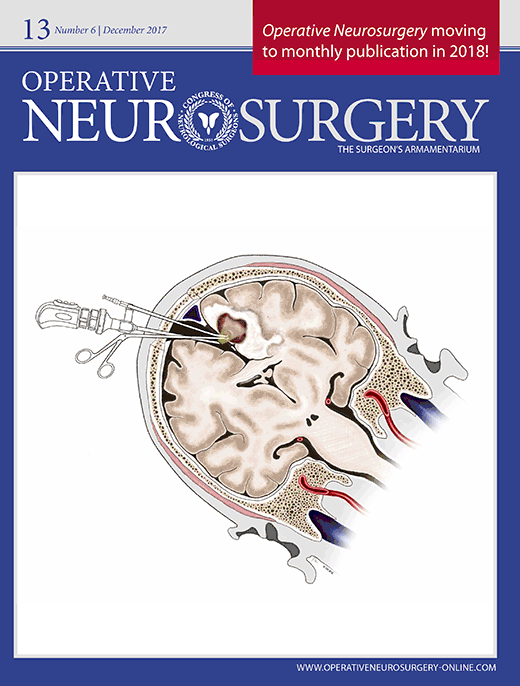
Our article “Microsurgical Endoscope-Assisted Gravity-Aided Transfalcine Approach for Contralateral Metastatic Deep Medial Cortical Tumors.” in the journal Operative Neurosurgery demonstrates our focused approach.
This research highlights an advanced form of minimally invasive neurosurgery designed to safely access tumors located deep within the brain while minimizing damage to surrounding structures.
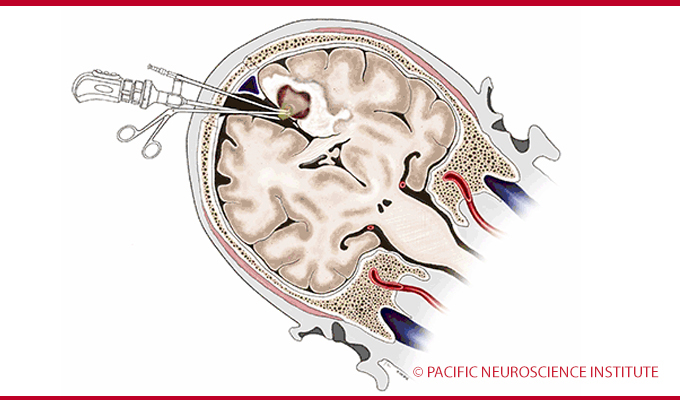
This study evaluated a surgical approach to reach tumors in the middle of the brain while minimizing collateral damage to normal brain tissue. By positioning the patient on their side, the swollen brain on the side of the tumor is supported, while the healthy brain gently falls away due to gravity—this is known as the gravity-assisted transfalcine approach.
What Is Gravity-Assisted Brain Surgery?
Gravity-assisted brain surgery is an advanced keyhole neurosurgical technique that uses the body’s natural positioning to create surgical space instead of relying on rigid retractors.
As described, this approach allows surgeons to access deep-seated tumors through narrow surgical corridors while minimizing retraction-related injury to normal brain tissue.
By incorporating endoscopic visualization, surgeons can enhance their view of critical anatomy and remove tumors more completely and safely.
This technique is particularly valuable for:
- Deep medial brain tumors
- Metastatic brain tumors with swelling
- Lesions located near critical brain structures
Types of Brain Surgery and Minimally Invasive Techniques
Modern neurological surgery includes several types of brain surgery, depending on the tumor type, size, and location:
Endoscopic Brain Surgery
- Uses a small camera (endoscope) for visualization
- Often performed through the nose (endonasal approach)
- Common for pituitary tumors and skull base tumors
Keyhole Craniotomy
- Small, targeted opening in the skull
- Minimizes tissue disruption
- Includes approaches such as eyebrow (supraorbital) surgery
Gravity-Assisted Transfalcine Surgery
- Uses patient positioning instead of retractors
- Reduces pressure on healthy brain tissue
- Ideal for deep or midline tumors
Traditional Open Brain Surgery (Craniotomy)
- Larger opening in the skull
- Used for complex or large tumors when needed
At Pacific Neuroscience Institute, the goal is to select the least invasive, most effective surgical approach tailored to each patient.
Outcomes and Benefits of Advanced Neurosurgical Techniques
By using endoscopic visualization and minimally invasive techniques, surgeons are able to successfully remove the majority of tumors safely while preserving normal brain function.
Key benefits of modern brain surgery include:
- Reduced damage to surrounding brain tissue
- Shorter hospital stays
- Faster recovery times
- Improved neurological outcomes
Minimally invasive neurosurgery is designed to maximize tumor removal while minimizing risk to critical brain structures, a central principle in modern brain tumor care.
The Role of Medical Illustration in Neurosurgery

Particularly noteworthy is that the cover image for the journal was created by Pacific Neuroscience Institute medical illustrator, Josh Emerson.
As a medical illustrator, Josh is a professional artist with advanced education in both life sciences and visual communication. Collaborating with physicians and scientists, he transforms complex anatomical information into visuals that communicate clearly to physicians, trainees, and patients.
Medical illustrations play an essential role in:
- Explaining complex brain surgery procedures
- Educating patients and medical professionals
- Supporting surgical planning and research
Advancing the Future of Brain Surgery
Innovations like the microsurgical endoscope-assisted gravity-aided approach represent an important enhancement in shift toward safer, more precise neurological surgery.
At Pacific Neuroscience Institute, neurosurgeons continue to refine these techniques using:
- Advanced neuroimaging
- Surgical navigation systems
- Endoscopic technology
- Multidisciplinary collaboration
These advancements are helping redefine push forward our understanding of what is possible in brain tumor surgery and neurological care.
Reference:
Microsurgical Endoscope-Assisted Gravity-Aided Transfalcine Approach for Contralateral Metastatic Deep Medial Cortical Tumors
Garni Barkhoudarian, MD et al.
Operative Neurosurgery, Volume 13, Issue 6, December 2017
About the Author