Moyamoya Disease

Overview

What is Moyamoya Disease?

Overview

Moyamoya disease is a rare neurovascular condition that can affect both children and adults and is caused by progressive narrowing or blockage of the major blood vessels supplying the brain.

As the arteries become blocked, the brain receives less oxygen-rich blood, which can cause ischemic stroke, mini-stroke (transient ischemic attack, or TIA), or bleeding into the brain. In response, the body forms tiny collateral vessels to try to restore circulation. On imaging, these small vessels appear as a hazy “puff of smoke,” giving the disease its name—moyamoya means “puff of smoke” in Japanese.
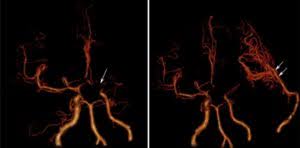
3D Vascular Imaging

3D vascular imaging of the brain showing successful revascularization surgery for moyamoya disease with extracranial-to-intracranial bypass.

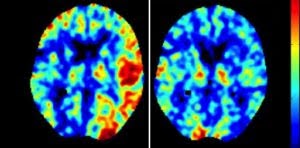
Brain Perfusion Heatmap

Brain perfusion heatmap demonstrating successful changes (reduction in areas of low blood flow) after revascularization surgery.

Who is Affected?

While moyamoya disease is often diagnosed in people of Asian descent, it has now been recognized worldwide across all ethnic groups. It can present in both children and adults, often with different patterns of symptoms:

  • Children tend to present with strokes or TIAs.
  • Adults are more likely to present with brain hemorrhage.
Symptoms + Causes

Moyamoya Disease Symptoms & Causes

Symptoms

Patients with moyamoya disease experience the symptoms of ischemic stroke, hemorrhagic stroke or TIA. Symptoms can include:

  • Weakness or numbness in an arm or leg
  • Difficulty speaking
  • Paralysis affecting one side of the body
  • Seizures
  • Cognitive difficulty or developmental delays (in children)
  • Headache
  • Weakness or numbness in an arm or leg
  • Sudden loss of vision or difficulty seeing

These symptoms may come on suddenly, especially during times of stress, fever, dehydration, or exertion when blood flow demands are higher.

Causes

The exact cause of moyamoya disease is not fully understood, but genetics are believed to play a role. In some families, the disease is inherited, and mutations in the RNF213 gene have been associated with increased risk. In other cases, moyamoya may occur secondary to other conditions such as:

  • Sickle cell disease
  • Neurofibromatosis type 1
  • Down syndrome
  • Prior cranial radiation therapy

When to See a Doctor

Seek medical attention immediately if you or a loved one experiences symptoms of stroke, TIA, or sudden neurological decline. Early diagnosis and treatment are critical to preventing permanent brain injury.

Diagnosis

Moyamoya Disease Diagnosis

Diagnosis typically involves:

Magnetic Resonance Imaging (MRI)

Detects brain injury or reduced blood flow.

Cerebral Angiography

The gold standard test, which visualizes narrowed arteries and collateral vessels.

Computed Tomography Angiography (CTA) or CT Perfusion

Provides additional information on blood flow patterns.

Neurocognitive Testing

May be used to evaluate the impact on thinking, memory, and function.

Treatment + Outcomes

Moyamoya Disease Treatment & Outcomes

Treatment Options

The narrowing of the arteries to the brain is irreversible. Medications may help reduce stroke risk (e.g., aspirin or other antiplatelet drugs), but they cannot restore adequate blood flow to the brain.

The mainstay of treatment for moyamoya disease is minimally invasive surgical revascularization, which creates new pathways for blood to reach brain tissue.

Direct bypass (EC-IC, Extracranial-to-intracranial bypass): A scalp artery (superficial temporal artery) is directly connected to a brain artery (middle cerebral artery) to restore flow.

Indirect bypass (EDAS, encephalo-duro-arterio-synangiosis): Scalp or muscle tissue is placed on the brain surface to encourage new vessel growth over time.

Combined techniques: Sometimes used to maximize blood flow restoration.

Patient Outcomes

With timely surgical treatment, most patients with moyamoya disease experience reduced risk of recurrent strokes and improved brain perfusion. Long-term outcomes are generally favorable, especially in children, who tend to recover brain function more effectively. Without treatment, moyamoya disease often progresses, leading to repeated strokes and cognitive decline.

Managing Your Condition

Managing Moyamoya Disease

While surgery is the cornerstone of treatment for moyamoya disease, patients can also protect brain health by:

  • Avoiding dehydration, which can worsen symptoms.
  • Treating high blood pressure and other cardiovascular risk factors.
  • Avoiding smoking and excessive alcohol use.
  • Taking prescribed medications such as antiplatelet agents (e.g., aspirin) to lower stroke risk.
  • Attending regular follow-up appointments and imaging to monitor brain circulation.
Care at PNI

Experience Compassionate, Expert Care
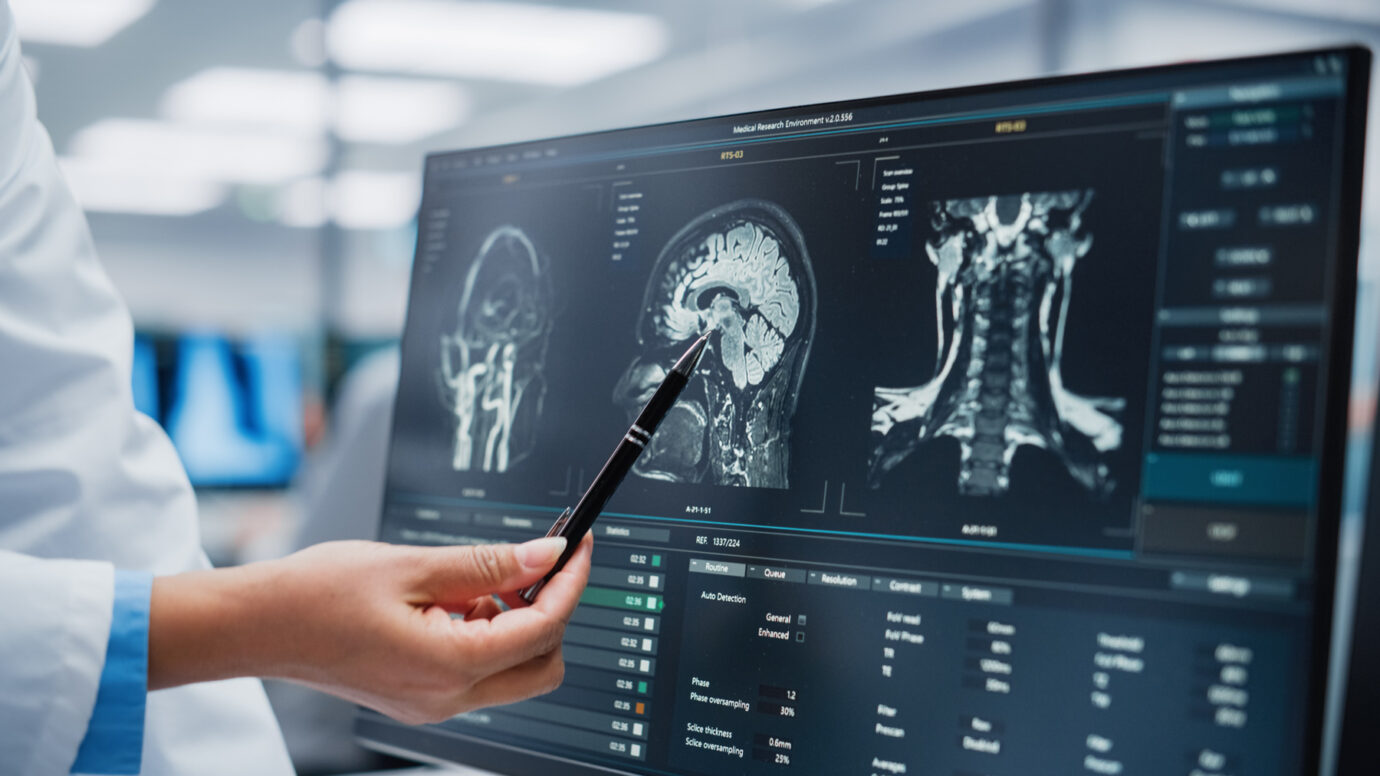
At Pacific Neuroscience Institute, our neurosurgeons and experts specialize in advanced imaging, minimally invasive keyhole surgery, and personalized treatment for moyamoya disease. We provide comprehensive care, from diagnosis through long-term follow-up.

FAQs + Resources

Learn More About Moyamoya Disease

With early diagnosis and surgical treatment, most patients do well, with significantly reduced risk of future strokes. Without treatment, the disease typically progresses, leading to repeated strokes and long-term neurological impairment.

Life expectancy varies depending on severity and treatment. Patients who undergo successful revascularization surgery often live normal or near-normal lifespans. Untreated, the disease carries a higher risk of disability and premature death.

Doctors use the Suzuki angiographic staging system:

  1. Narrowing of carotid fork.
  2. Initiation of moyamoya vessels.
  3. Intensification of collateral vessels.
  4. Minimization of main arteries.
  5. Reduction of moyamoya vessels.
  6. Disappearance of moyamoya vessels with reliance on external collaterals.

Moyamoya disease is rare, affecting about 1 in 100,000 people. It is more common in East Asian countries, but cases are increasingly recognized worldwide.

Medications that constrict blood vessels (vasoconstrictors) should generally be avoided. Patients should not stop or change medications without consulting their specialist.

No, moyamoya is not considered terminal if diagnosed and treated early. With proper surgical treatment, many patients live long, healthy lives.

There is no cure in the sense of reversing the arterial narrowing. However, surgery effectively restores blood flow and prevents further strokes, allowing many patients to live full lives.

The exact trigger is unknown. Genetic predisposition is believed to play a major role. In some cases, it may develop secondary to other medical conditions or radiation exposure.

Progression varies. Some patients deteriorate rapidly with recurrent strokes, while others remain stable for years. Regular monitoring is essential.

Early symptoms often resemble stroke or TIA: sudden weakness, speech difficulties, vision changes, or seizures. Children may also present with headaches, developmental delays, or fainting episodes.

Resources

Contact Us

Get Expert Care from Leading Specialists

If you or a loved one is experiencing symptoms of moyamoya disease, early evaluation and treatment are critical. At Pacific Neuroscience Institute, our team offers expert diagnosis, advanced surgical treatments, and long-term care.

Contact Us

Providence Saint John’s Health Center
2125 Arizona Ave
Santa Monica, CA 90404
310-829-8319

Providence Little Company of Mary Medical Center Torrance
4201 Torrance Blvd #520
Torrance, CA 90503
424-212-5340

Providence Holy Cross Medical Center
15031 Rinaldi St, Mission Hills, CA 91345
818-847-6570

Providence Saint Joseph Medical Center
501 S. Buena Vista Ave
Burbank, CA 90505
818-847-6049

Written and reviewed by:
The Pacific Neuroscience medical and editorial team
We are a highly specialized team of medical professionals with extensive neurological and cranial disorder knowledge, expertise and writing experience.

Last Updated: