Debunking the Myth of Living in the Past: The Benefits of Reminiscence Therapy
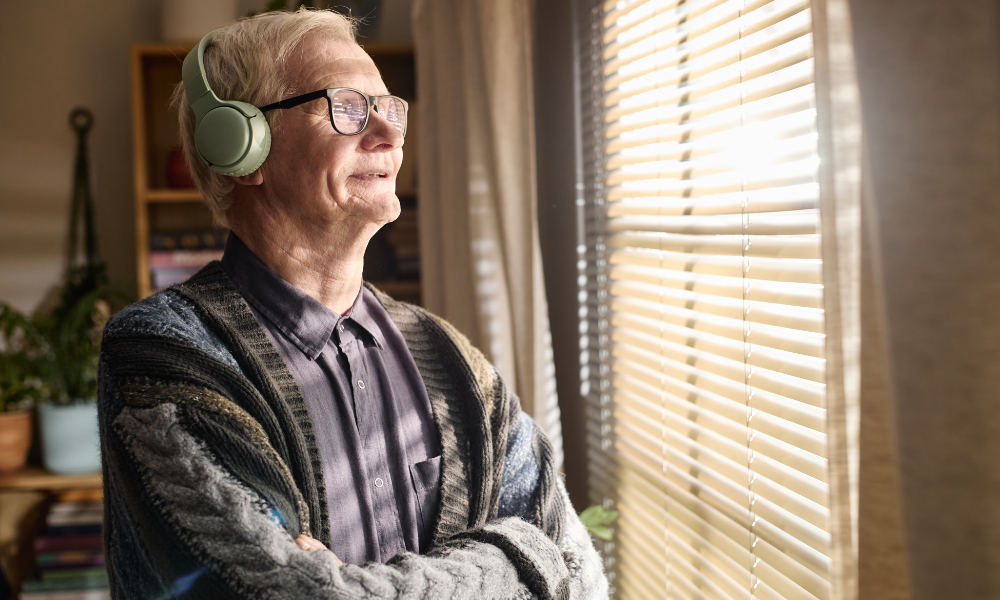
People who enjoy reminiscing about old times are sometimes chided for living in the past. The advice is usually to stop looking backward and focus on the present. And while there is certainly value in appreciating the here and now, looking back on meaningful life experiences isn’t necessarily a bad thing.
In fact, research suggests that reminiscing can offer important benefits for older adults, supporting emotional well-being, social connection, and, in some cases, cognitive health.
Remembering meaningful moments, sharing stories, and reconnecting with familiar experiences can help older adults maintain a sense of identity and purpose. It can also create opportunities to connect with loved ones in a meaningful way.
“It really puts people back on the center of the stage during the reminiscence, that they have a primary role in what’s going on,” David Merrill, MD, PhD, director of Pacific Neuroscience Institute’s Brain Health Center in Santa Monica, California, says, “It’s really a way to celebrate their lives with people.”
What Is Reminiscence Therapy?
Reminiscence therapy is a therapeutic approach that encourages people to recall and reflect on meaningful experiences from their past. It often involves using photographs, music, familiar objects, and other personal mementos to help bring memories to life.
While it can be practiced individually, reminiscence therapy is also frequently conducted in group settings, where participants have the opportunity to share stories, listen to others, and build connections through common experiences.
The benefits can extend beyond simply recalling happy memories. Research suggests that reminiscence-based activities may help improve self-esteem, reduce feelings of loneliness, ease symptoms of depression, and enhance communication and social interaction. For people experiencing cognitive impairment, reminiscence therapy may also offer additional benefits, although outcomes vary and research is ongoing.
Dr. Merrill encourages older adults to make reminiscing a regular part of their daily routine.
“I think it would be good to have a daily practice of reminiscence. You might want to fold that in with a gratitude practice,” Dr. Merrill says. “Reminiscing about a meaningful moment or positive life event could be at a specific time of day or part of a morning ritual. I think the benefit would be additive over time.”
How to Make Reminiscing a Daily Habit

One of the easiest ways to incorporate reminiscence into everyday life is to engage the senses. Familiar sights, sounds, smells, tastes, and textures can all serve as powerful reminders of meaningful experiences.
Elder Care Alliance suggests several simple ways to encourage reminiscence through the five senses:
- Sound: Play favorite songs or music from an important period in someone’s life. Music can evoke powerful emotional connections and bring back memories associated with particular people, places, and experiences.
- Taste: Prepare favorite childhood meals, family recipes, or foods associated with special occasions.
- Scent: Create “scent cards” using familiar fragrances, such as a loved one’s perfume or cologne, or scents associated with a particular place or time.
- Touch: Reintroduce familiar tactile activities, such as knitting, sewing, gardening, or drawing. Handling meaningful objects can also encourage memories and conversation.
- Sight: Look through old photographs, family albums, postcards, or familiar magazines. These visual reminders can help spark conversations about people, places, and important life events.
The goal isn’t to test someone’s memory or see how much they can recall. Rather, it’s to create a relaxed, enjoyable opportunity to reconnect with personal experiences. Allow the conversation to unfold naturally, without putting pressure on someone to remember specific details.
The Science Behind Unlocking Old Memories

Have you ever heard a familiar song and suddenly found yourself transported back to a particular time in your life? Perhaps a childhood home, a family holiday, or a special occasion comes rushing back in surprising detail.
This is because memories are often associated with sensory experiences and environmental cues. A familiar song, photograph, fragrance, or object can act as a reminder, helping us reconnect with experiences that may not otherwise come readily to mind.
Research is beginning to shed light on why this happens. A 2023 study published in Cell Reports, titled Adaptive Expression of Engrams by Retroactive Interference, explored how memories are stored and retrieved in the brain. The researchers found that, in mice, memories that appeared to have been forgotten could sometimes be reactivated when the animals were re-exposed to cues associated with the original experience.
The findings offer interesting insights into how memory works. They suggest that forgetting doesn’t necessarily mean a memory has disappeared; rather, accessing it can become more difficult. Although this research was conducted in animals and cannot be directly applied to human reminiscence, it adds to our understanding of the complex processes involved in memory storage and retrieval.
For older adults, this helps illustrate why familiar photographs, music, and personal belongings can be useful tools for encouraging recollection. Someone who struggles to remember the details of their childhood home, for example, might find that looking at an old photograph of the house brings back memories of its rooms, the people who lived there, or the neighborhood surrounding it.
These reminders can provide a starting point for meaningful conversations, even when recalling details independently is difficult.
Reminiscence: More Than Just a Trip Down Memory Lane
The value of reminiscing goes beyond nostalgia. Looking back on meaningful life experiences can help older adults maintain a sense of identity, recognize how far they’ve come, and appreciate the relationships and experiences that have shaped their lives.
It can also be particularly valuable for families and caregivers. Taking the time to listen to an older loved one’s stories communicates that their experiences matter and that their contributions are appreciated. Sharing memories can strengthen relationships, encourage intergenerational connections, and create opportunities to learn more about family history.3,4
Importantly, reminiscence doesn’t have to focus exclusively on happy memories. Reflecting on challenges, personal achievements, and significant life transitions can also help people make sense of their experiences. The key is to approach these conversations with sensitivity and allow individuals to share only what they feel comfortable discussing.
For those living with memory difficulties, it’s equally important to avoid turning reminiscence into a memory test. If someone cannot recall a name or specific detail, gently redirect the conversation rather than correcting or pressuring them.
Looking Back Can Help Us Move Forward

The idea that reminiscing means living in the past deserves a second look. Reflecting on meaningful experiences can be a valuable way to support emotional well-being, strengthen relationships, and celebrate the experiences that make each person’s life unique.
Research into reminiscence therapy continues to explore its potential benefits for older adults, including those experiencing cognitive impairment. While it isn’t a treatment for dementia or a proven way to prevent cognitive decline, studies suggest that it can be a helpful complementary approach to supporting quality of life and emotional health.3,4
So, the next time an older loved one wants to tell you a story from decades ago, take a moment to listen. Pull out an old photo album, play a favorite song, or ask about a special memory. You may discover that these trips down memory lane are about much more than the past. They’re about connection, identity, and celebrating a lifetime of experiences.
Professional Support at PNI
Ultimately, supporting brain health means looking at the whole person, not just memory and cognitive function. Social engagement, meaningful activities, emotional well-being, and opportunities to stay connected all play an important role in healthy aging. At Pacific Neuroscience Institute, our Brain Wellness & Lifestyle Program takes this comprehensive approach, helping individuals embrace lifestyle strategies that support brain health, enhance quality of life, and promote well-being at every stage of life.
Learn more:
213-344-2037 | lifestyle@pacificneuro.org
About Dr. David Merrill

David A. Merrill, MD, PhD, is a double-board certified adult and geriatric psychiatrist and neuroscientist. He is director of the Pacific Brain Health Center at the Pacific Neuroscience Institute.
His practice, educational, and research activity focus on the Precision Brain Health Program, applying precision medicine approaches to optimize brain aging in middle-aged and older adults at risk for and with neurodegenerative disorders including Alzheimer’s disease and Parkinson’s. Dr. Merrill was presented with the Singleton Endowed Chair in Integrative Brain Health in May 2024.
References
- Neuroscientist debunks the idea that living in the past is bad. It’s great for mental health. Tod Perry, Upworthy, Sept 5, 2026
- Adaptive Expression of Engrams by Retroactive Interference. Cell Reports, 2023; 42
- Effectiveness of reminiscence therapy on multiple health outcomes for older adults: An umbrella review. BMC Geriatr. 2025 Nov 5;25(1):847. doi: 10.1186/s12877-025-06484-6
- Effects of Reminiscence Therapy for People Living With Cognitive Impairment and Their Caregivers: A Systematic Review and Meta-Analysis. J Am Med Dir Assoc. 2026 Jan;27(1):105978
About the Author