
The Whole Story about Chemo Brain and Cognitive Dysfunction
Adapted from original article published on CancerConnect , July 2017. Updated from article published May 21, 2024
Chemo brain, also called cancer-related cognitive dysfunction, is one of the most common and least-discussed challenges of cancer survivorship. Research shows it affects up to 75% of people receiving cancer treatment, with symptoms ranging from mild memory lapses to difficulty concentrating, multitasking, and thinking clearly. This article from the specialists at Pacific Neuroscience Institute explains what chemo brain is, why it happens, how long it lasts, and what can help.
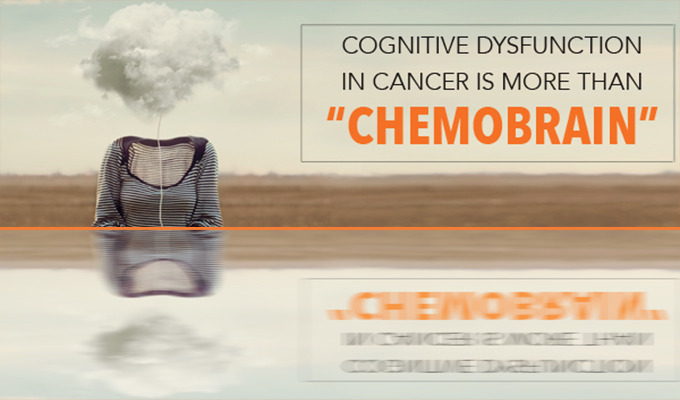
Cognitive Dysfunction In Cancer Is More Than “Chemo Brain”
What is Chemo Brain?
Chemo brain is one of the most common concerns raised by cancer survivors. As the number of people surviving cancer has grown, so has interest in survivorship issues that affect quality of life, work reintegration, and long-term function. In the lay community, the term “chemo brain” has helped raise awareness, though experts note it can understate the full picture — cognitive dysfunction in cancer has multiple contributing factors, not just chemotherapy alone.
While chemotherapy is the most obvious cause, it is not the only cancer-treatment-related factor involved. Understanding the full range of contributing mechanisms helps explain why recommendations for prevention and treatment can vary so widely from patient to patient.
Broader View of Cancer-related Cognitive Dysfunction
Cancer-related cognitive dysfunction has been reported in as many as 75% of individuals receiving cancer treatment. For many, the symptoms will be subtle and short-lived. However, 15 to 35% may experience persistent memory deficits well beyond the active treatment phase. 2
While the deficits are often mild — more annoying than incapacitating — and frequently go undiagnosed, the experience of chemo brain symptoms is real and significant for cancer survivors. 1 For younger patients with many productive years ahead, cognitive deficits can profoundly affect employment, academic goals, and quality of life. Symptoms of cancer-related cognitive dysfunction can span multiple cognitive domains, including short-term memory, concentration, attention, and planning. 3
Patients commonly describe:
- Loss of short-term memory
- Difficulty thinking clearly
- Inability to concentrate
- Impaired multitasking 2
Fortunately, more serious neurological symptoms — such as inability to understand or express speech, inability to recognize objects, or inability to perform purposeful movements — do not occur with cancer-related cognitive dysfunction. It also does not interfere with reasoning, problem-solving, or older memories. 2
Why Does Chemo Brain Occur?
Experts have offered many explanations as to why cancer-related cognitive dysfunction occurs. One of the most obvious reasons is that medications used in cancer treatment, in particular, those that cross the blood–brain barrier, cause direct damage to neurons and other brain cells.
- Radiation therapy has been reported to induce cognitive dysfunction through functional and structural effects on the brain.3
- Surgery and anesthesia have also been linked to cancer-related cognitive dysfunction, with evidence pointing to inflammatory and immune responses as the mechanism behind the changes.4
- Genetic predisposition has also been implicated as certain genes have been found to play a role in the cognitive decline of individuals receiving chemotherapy.5
Patient-related risk factors also matter:
- A higher risk of cancer-related cognitive dysfunction has been documented in individuals with baseline cognitive impairment prior to receiving systemic therapy. 4
- Mood disorders such as anxiety and depression have been associated with both subjective and objective measures of cognitive function. 4
- Endocrine factors, including hormonal therapy and menopausal symptoms, have been linked to higher rates of cognitive dysfunction. 4
Can Chemo Brain be Prevented?
Pharmaceutical Interventions
Effective medical interventions to prevent or treat cancer-related cognitive dysfunction remain limited. Reducing the risk by eliminating causative agents would mean forgoing potentially life-saving treatment. Most drugs, dietary supplements, and cognitive training strategies are still under investigation, and a few have been deemed ineffective and are not recommended for practice. The use of growth factors has not been shown to prevent or treat cognitive dysfunction and has raised concerns about possible increased tumor growth, decreased survival time, and cardiovascular side effects. 6
There are currently no medications approved for the prevention or treatment of cancer-related cognitive dysfunction. 6 Neurostimulants such as methylphenidate (Aptensio XR, Concerta, Ritalin LA) and modafinil (Provigil) have not shown sufficient evidence for formal approval in this use, though some patients appear to have meaningful benefit. 2 High-dose Vitamin E has shown improvements in executive function, verbal memory, and visual memory, though safety concerns exist at doses above the recommended daily allowance. 2 Ginkgo biloba has not been shown to be effective and may increase bleeding risk. 6
Other agents under active investigation include donepezil (Aricept), lithium, rosiglitazone (Avandia), pioglitazone (Actos), memantine (Namenda XR), and sertraline (Zoloft). 3,6 More research is needed.
How Long Does Chemo Brain Usually Last?
Chemo brain symptoms vary in duration:
- During treatment: Symptoms often begin and persist throughout chemotherapy
- Post-treatment: For many patients, brain fog improves within a few months of completing treatment
- Long-term: In some cases, memory problems may continue for years, though they typically improve gradually
Non-Pharmaceutical Interventions
Non-pharmacological approaches generally carry fewer side effects, though most lack strong evidence for effectiveness. The best-supported option is cognitive rehabilitation — structured mental training focused on improving attention, concentration, and memory skills. 2,6 Most other non-drug strategies require more research.
Brain Wellness & Lifestyle Interventions
Physical exercise is gaining significant traction in cognitive research. Growing evidence supports aerobic, resistance, and mindfulness-based exercise as effective interventions for cancer-related cognitive dysfunction. 2 The benefits are linked to reduced inflammatory markers, increased neurotrophic factors that support brain cell growth and survival, and positive effects on fatigue and sleep. 2
Pacific Neuroscience Institute’s Brain Wellness and Lifestyle program offers evidence-informed approaches to cognitive health which can help patients managing the neurological effects of cancer treatment.
Electroencephalography (EEG) biofeedback, a real-time display of the brain’s electrical activity, is also being studied as a potential intervention for cognitive dysfunction. 2
Strategies to Deal with Chemo Brain
Practical coping strategies can meaningfully reduce the daily impact of cognitive dysfunction:
- Stay organized: Use planners or apps to track appointments and tasks rather than relying on memory
- Practice mindfulness: Meditation and breathing techniques can improve focus and reduce stress
- Healthy habits: Regular exercise, a balanced diet, and adequate sleep all support brain function
- Mental exercises: Puzzles, reading, and cognitively stimulating activities help maintain sharpness
- Schedule strategically: Plan demanding tasks for your best time of day, often the morning 4
It’s also worth addressing factors that may worsen cognitive symptoms: anxiety, depression, fatigue, and poor sleep. A medication review with your care team is worthwhile, as some medications can affect cognition.
Keeping Treatment Goals in Mind
The data are clear: Cancer-related cognitive dysfunction is real and deserves to be taken seriously. At the same time, the research also confirms that cognitive dysfunction in most cancer patients is mild and often reversible. The fear of chemo brain should not dissuade anyone from receiving potentially beneficial cancer treatment, particularly when the goal is cure or disease control. 7
For patients who do experience longer-term cognitive effects, personalized follow-up care, including formal cognitive assessments and targeted intervention plans, can help protect quality of life.
Is Chemo Brain Reversible?
Chemo brain is often reversible, though recovery timelines vary:
- Gradual improvement: Many patients notice symptoms easing after chemotherapy ends
- Full reversal: For some, memory and cognitive function return to baseline within months
- Persistent symptoms: In rare cases, brain fog lingers longer but often continues to improve over time
Engaging in mental exercises, healthy lifestyle choices, and regular follow-up with your care team supports recovery. Discuss your symptoms with your provider to monitor progress and adjust strategies as needed.althy lifestyle choices to aid recovery. Regularly discuss your symptoms with your healthcare team to monitor progress and adjust strategies as needed. With time and care, many patients experience significant improvement in their cognitive functions.
References
- Player L, Mackenzie L, Willis K, Loh SY. Women’s experiences of cognitive changes or ‘chemobrain’ following treatment for breast cancer: a role for occupational therapy? Aust Occup Ther J. 2014;61(4):230-240.
- Asher A, Myers JS. The effect of cancer treatment on cognitive function. Clin Adv Hematol Oncol. 2015;13(7):441-450.
- Davis J, Ahlberg FM, Berk M, Ashley DM, Khasraw M. Emerging pharmacotherapy for cancer patients with cognitive dysfunction. BMC Neurol. 2013;13:153.
- Moore HC. An overview of chemotherapy related cognitive dysfunction, or ‘chemobrain’. Oncology (Williston Park). 2014;28(9):797-804.
- Armstrong K. Chemobrain: Physiological Predisposing Factors. MEDSURG Nursing. 2016;25(4):215-223.
- Von Ah D, Jansen CE, Allen DH. Evidence based interventions for cancer and treatment-related cognitive impairment. Clin J OncolNurs. 2014;18 Suppl:17-25.
- Ganz PA. “Doctor, will the treatment you are recommending cause chemobrain?”. J ClinOncol. 2012;30(3):229-231.