Caring for Someone with Dementia: Why You Don’t Have to Do It Alone

You Are Not Alone, and You Shouldn’t Have to Be
Caring for a loved one with dementia is one of the hardest things a person can do. It changes your days, your sleep, your relationships, and your sense of self. If you feel overwhelmed, exhausted, or isolated, know that tens of millions of caregivers around the world share those exact feelings.
There is nothing wrong with you. This is the nature of the work.
The Challenges Family Caregivers Face Every Day
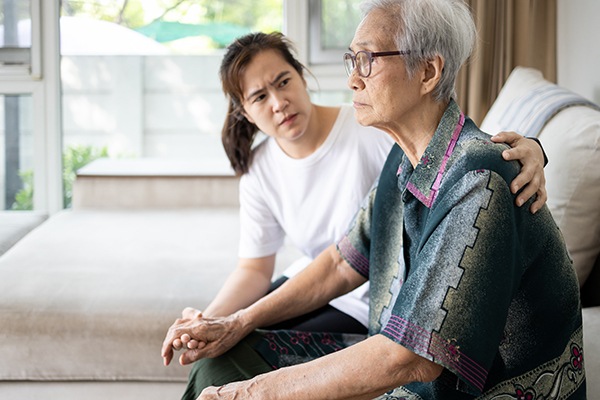
What Most Caregivers Worry About
A systematic review of 34 studies examined what family caregivers of people with dementia need most.1 The same themes came up again and again, organized into four categories:
- Feeling supported
- Receiving accessible and personalized information about the disease
- Being trained to handle the day-to-day realities of care, and
- Finding a balance between the caregiving role and their own personal needs.
The specifics ranged from managing difficult behaviors like agitation, wandering, and repetitive questions, to navigating grief, loneliness, financial stress, and legal concerns.
Out of all four categories, “being supported” was the overarching theme. The majority of family caregivers’ needs were oriented toward receiving support, help with daily care, and finding a balance between caring for someone else and caring for themselves.1
Information and training mattered too, but caregivers described them as tools that helped them feel more capable and less alone and in turn, more supported. What caregivers were really asking for wasn’t just facts about the disease. It was the feeling that someone had their back.
What Does Caregiver Support Really Mean?
You hear it all the time: “make sure you get support.” It sounds nice. But when you are juggling medications, meals, and the same conversation on repeat, “get support” can feel like one more vague item on an already packed to-do list.
So let’s make it concrete.
- Support can look like someone teaching you what to actually do when your loved one gets agitated at sundown, because nobody handed you a manual for this.
- It can look like a neighbor sitting with your husband for two hours on a Saturday so you can run errands, grab a coffee, or just sit somewhere quiet for a minute.
- It can look like a social worker helping you figure out what insurance will cover, or a lawyer walking you through power of attorney before it becomes an emergency.
- And sometimes, support looks like being in a room with six other people who just get it. People who laugh at the same absurd moments you do, who swap tricks for redirecting a conversation at 2 am, and who remind you that you are doing a better job than you think.
No single type of support checks every box. What you need at the beginning of this journey will look different from what you need two years in. But the starting point is the same: recognizing that asking for help is not a sign of failure. It is a strategy.
Research Behind Care Partner Support
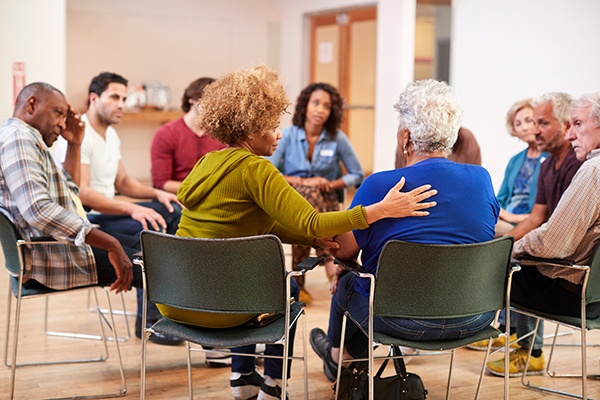
Support Groups Improve Quality of Life
The science on this is clear, and some of the findings may surprise you.
A major analysis published in the International Journal of Nursing Studies pooled data from 85 clinical trials involving family caregivers of people with dementia and compared 11 different types of programs, including therapy, education, case management, and mindfulness.2 Out of all of them, support groups were the only intervention that had a statistically significant effect on improving caregiver quality of life.
Not medication. Not formal counseling. A room full of people going through the same thing made the biggest difference.
Another study published in the International Journal of Geriatric Psychiatry combined results from 30 studies of family caregivers and found that support group participation significantly reduced depression, eased feelings of burden, and improved social connections.3 The effect on psychological well-being was substantial. The analysis also found that groups meeting for eight or more weeks and using a structured approach produced the strongest results.3
Support Helps Care Partners Reframe Their Experience
Here is one that doesn’t get talked about enough: researchers publishing in the Journal of Advanced Nursing spent a year observing 25 family caregivers, including spouses, daughters, siblings, and a daughter-in-law, across four support groups in Denmark, attending 30 group meetings and conducting in-depth interviews with each participant.4 They found that caregivers who attended support groups didn’t just feel less stressed. They actually began to see their caregiving role differently. Married caregivers, in particular, reported that the groups helped them hold onto the feeling of being a couple, of still giving and receiving love, even as their partner’s memory faded. The groups became a place where people could talk about the good moments, not just the hard ones, and that shift in focus made a real difference.4
What Happens in a Dementia Caregiver Support Group?

A support group is simply a gathering of people who understand what you are going through because they are going through it too. It can be in person at a community center, a hospital, or a church. It can be online from your living room at 9 pm after your loved one has gone to sleep. Research suggests that online groups can offer many of the same benefits, making them a practical option for caregivers who can’t easily leave home.3
In a group, you can share what your days really look like without having to explain or apologize. You can pick up practical tips from someone who figured out how to manage the exact problem you are struggling with right now. You can say the things you feel guilty about saying anywhere else. And you can laugh, because sometimes the absurdity of the situation is the only thing that gets you through the day.
Research shows that the emotional benefit of these groups often comes not from gaining new knowledge, but from the simple experience of being heard by people who truly get it. Trust builds. Moods lift. Self-esteem grows. And over time, caregivers who attend groups report feeling more motivated and more capable of continuing to provide care.3,4
Taking Care of Yourself Matters
Taking care of yourself is not a luxury
It is what makes it possible to keep taking care of someone else. Even one meeting, one phone call, one conversation with someone who understands can change the way you carry this weight.
Finding Support Near You
How to Find a Dementia Caregiver Support Group
Talk to your healthcare provider or care team about support group options near you.
The Alzheimer’s Association runs support groups across the country, both in person and online. Their 24/7 Helpline is 1-800-272-3900, and their website is alz.org. Many hospitals, senior centers, assisted living and memory care communities, and faith communities host groups as well.
Pacific Neuroscience Institute Dementia Care Partner Support Group
The Pacific Neuroscience Institute hosts a virtual care partner support group for those caring for a loved one with dementia.
- Zoom meetings
- Wednesdays from 3 –4 pm PT
- Enrollment is open on a rolling basis
For more information or to register:
- Phone: 213-344-2037
- Email: Lifestyle@pacificneuro.org
- Website: pacificneuroscienceinstitute.org/patient-care/support-groups
- PDF flyer: Download here
References
1. Bressan V, Visintini C, Palese A. What do family caregivers of people with dementia need? A mixed-method systematic review. Health & Social Care in the Community. 2020;28(6):1942-1960. https://onlinelibrary.wiley.com/doi/10.1111/hsc.13048
2. Sun Y, Ji M, Leng M, et al. Comparative efficacy of 11 non-pharmacological interventions on depression, anxiety, quality of life, and caregiver burden for informal caregivers of people with dementia: A systematic review and network meta-analysis. International Journal of Nursing Studies. 2022;129:104204. https://www.sciencedirect.com/science/article/abs/pii/S0020748922000335
3. Chien LY, Chu H, Guo JL, et al. Caregiver support groups in patients with dementia: A meta-analysis. International Journal of Geriatric Psychiatry. 2011;26(10):1089-1098. https://onlinelibrary.wiley.com/doi/10.1002/gps.2660
4. Lauritzen J, Bjerrum MB, Pedersen PU, Sørensen EE. Support groups for carers of a person with dementia who lives at home: A focused ethnographic study. Journal of Advanced Nursing. 2019;75(11):2997-3007. https://onlinelibrary.wiley.com/doi/10.1111/jan.14151
About the Author