
A Patient’s Journey of Undiagnosed Hydrocephalus
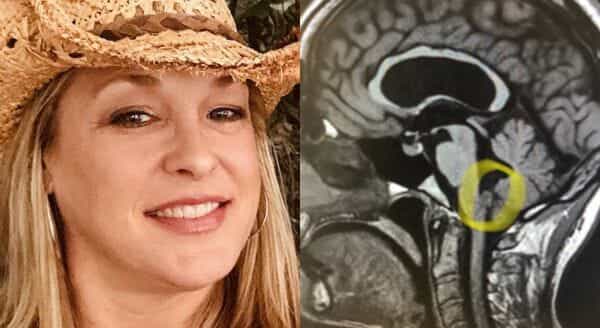
Lauren S. shares her remarkable experience as a grateful patient of the Pacific Adult Hydrocephalus Center at Pacific Neuroscience Institute. After years of misdiagnoses and a long, often grueling search for answers, she was finally referred to neurosurgeon Dr. Garni Barkhoudarian, who has been her trusted physician since 2021.
Lauren first met Dr. Barkhoudarian in March 2021 and underwent endoscopic third ventriculostomy (ETV) surgery the following month. She describes herself as a “walking miracle” because of Dr. B’s expertise and the care she received at PNI. Today, Lauren continues to improve. She is an active volunteer with the Hydrocephalus Association and is sharing her story in hopes of encouraging others to advocate for their health and to know that healing is possible.
A Long Journey Toward Hydrocephalus Diagnosis
My journey with hydrocephalus began in 1998 when, at 23, I moved to LA to pursue a modeling career. Despite being a former athlete and quite fit, I was told I wasn’t “model fit” and needed to lose weight to succeed in both mainstream and fitness modeling. Driven to meet these expectations, I overexercised and lost 20 pounds. Within a year, my body started to shut down, and I was eventually diagnosed with Epstein-Barr virus and a myriad of other symptomatic conditions. Sensing I had triggered something serious in my body but unsure of what it was, I decided to move back home as my symptoms continued to escalate.
Misdiagnoses and Missed Clues
Unfortunately, those caring for me at the time mistook my symptoms for a mental health disorder, and I started to get ill quickly. They decided it was best for me to be admitted to the emergency room for further evaluation and treatment. Although my memories from that day are hazy, due to being heavily sedated, I distinctly recall hearing the term “brain tumor” for the first time. After my stay, the brain tumor was not mentioned again, but my symptoms continued to worsen.
Searching for Answers
Over the next few years, I continued to seek treatment from numerous specialists and received various diagnoses, ranging from an autoimmune condition to simply migraines. This period became a frustrating cycle of wasted energy and money, leaving me utterly exhausted.
During this exhausting time, I met my husband. Within six months of our marriage, I discovered I was pregnant with our first child, a surprise given the conditions I was believed to have and the symptoms I endured. Motherhood came unexpectedly and sooner than I had anticipated amidst all my health struggles. My symptoms continued to worsen, including chronic migraines, nausea, vomiting, ringing in my ears, disorientation, vertigo, memory loss, and vision issues. The list felt endless. In 2010, after having our second child and adopting our daughter, my husband encouraged me to seek a diagnosis once again. It was time to refocus on my health and not just live with these symptoms anymore.
When Hydrocephalus Was Finally Suspected
In 2011, I had seen at least ten doctors, had multiple lab tests done, and been diagnosed with seven or eight different conditions, as well as being prescribed various medications. I felt lost and so alone. My mental health was suffering, and I struggled to accept that the career I had once hoped and dreamed of would never materialize. Though I knew I was a good mom, coming to terms with the loss of those aspirations was difficult. Despite this, I remained determined and hopeful that answers would eventually come.
Within a few short years, my discomfort had escalated into chronic pain, and I still had no clear answers. In 2013, I consulted several neurologists, shared my symptoms, and underwent numerous, often lengthy tests. Despite more diagnoses and the addition of cervical pain, I was no closer to a definitive answer and felt increasingly dismissed by doctors. Neurologists began using complex terms I didn’t understand, such as “ventriculomegaly,” “grey matter,” and “subependymoma,” though I didn’t realize at the time that the latter referred to a tumor. The doctors never once used the lay term “tumor,” so I was unaware of its significance. However, I eventually learned that I had acquired Chiari malformation from the untreated hydrocephalus, which would become a crucial part of my differential diagnosis, as it was compromising my brain stem and causing symptoms like loss of coordination, balance issues, cognitive decline, and other central nervous system symptoms.
The Role of Brain Imaging in Hydrocephalus Diagnosis
After another break from the medical world, I decided to seek a diagnosis again in 2021. I went back to the neurologist I saw previously, who sent me to a specialist for advanced imaging, with a 4D machine for a specialized MRI, and even the radiologic technician said he saw something concerning: my Chiari malformation had worsened. During this time, the doctor mentioned hydrocephalus, suggesting I had likely had it all along. Though exhausted, I finally felt heard. My neurologist referred me to a neurosurgeon, who said, “You have a brain tumor, and it has been there a long time.” I was deeply concerned and had many questions. I also had unsettling flashbacks to my inpatient stay in the hospital when a brain tumor was mentioned but never discussed further.
Reviewing Records and Realizing Hydrocephalus Was Missed
I requested my hospital records, hoping to find scans, but they only provided paperwork. To my surprise, the term “hydrocephalus” appeared on the documents.I had no idea this diagnosis had been considered before and had gone untreated all this time.
Moving Forward With Treatment
At this point, my doctor and I began discussing treatment options. An endoscopic third ventriculostomy (ETV) was proposed as a good option. I underwent ETV surgery in March 2021. Although it took about a year to experience significant relief from my symptoms, I was finally moving in the right direction.
Life After Hydrocephalus Diagnosis
Now, three years after the surgery, I continue to improve. I know I will always deal with some side effects of my hydrocephalus going untreated for so long, but the ETV has proven to be a successful treatment for me. Despite my lengthy journey to diagnosis, I learned the importance of advocating for myself and my body. You know yourself better than anyone else.
Understanding Hydrocephalus Diagnosis
How is hydrocephalus diagnosed?
Diagnosis usually involves clinical evaluation, brain imaging (MRI or CT scans), and sometimes a spinal tap or lumbar puncture to measure cerebrospinal fluid (CSF) pressure.
Why is hydrocephalus often misdiagnosed?
Symptoms can overlap with other conditions such as dementia, migraines, or balance disorders, making a clear differential diagnosis essential.
What happens after hydrocephalus is diagnosed?
Treatment options may include shunt surgery, ETV, or careful monitoring, depending on whether the condition is acute hydrocephalus, idiopathic NPH (normal pressure hydrocephalus), or communicating hydrocephalus.
About Dr. Garni Barkhoudarian
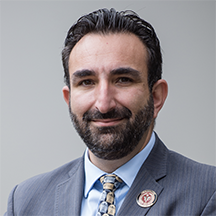
Garni Barkhoudarian, MD, FAANS, is a board-certified, fellowship-trained neurosurgeon with a focus on skull base and minimally invasive endoscopic surgery. Dr. Barkhoudarian has particular interest and expertise in pituitary and parasellar tumors, brain tumors, skull-base tumors (including meningiomas, craniopharyngiomas, chordomas and schwannomas), intra-ventricular brain tumors, colloid cysts, trigeminal neuralgia, hemifacial spasm and other vascular compression syndromes.