
Rebuilding Confidence After Facial Paralysis
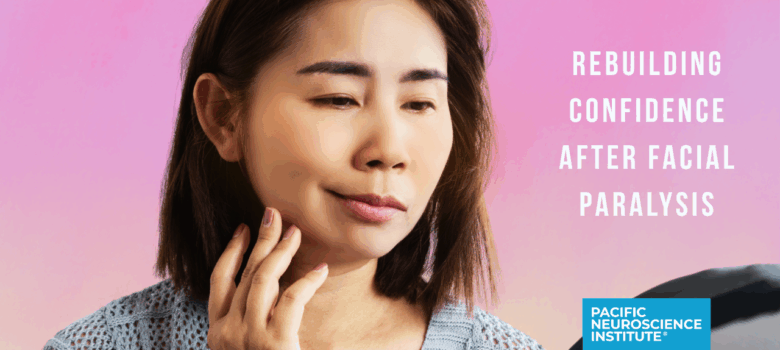
Learn how facial paralysis impacts facial movement, communication, and confidence. At Pacific Neuroscience Institute, Dr. Amit Kochhar delivers advanced facial nerve restoration and compassionate care to help patients regain function and quality of life.
Understanding Facial Paralysis
Facial nerve damage may occur after traumatic injury or as a result of surgery, especially when a tumor lies close to the facial nerve. The resulting paralysis affects far more than appearance—it alters how a person interacts with the world. Smiling, blinking, and expressing emotion are core human connections, and when those movements are lost, the emotional impact can be profound.
Facial nerve disorders can also arise in other ways. Bell’s palsy for example, is a common cause of facial paralysis, and although most patients recover, many experience lingering effects such as incomplete paralysis or synkinesis (involuntary muscle movements). Ramsay Hunt syndrome, or shingles of the face, can also lead to facial paralysis that may take many months to resolve.
At the Facial Disorders Center at Pacific Neuroscience Institute, Amit Kochhar, MD, leads a program that is much more than surgical intervention. His approach focuses on restoring confidence, relieving discomfort, and helping patients feel whole again.
Facial Disorders Center at Pacific Neuroscience Institute
Beginning as the Facial Nerve Disorders Program in 2021 under Dr. Kochhar’s direction, the clinic has grown to serve patients with a wide range of facial paralysis conditions.
“Data suggests that probably 30% to 40% of patients with facial paralysis who have been deemed ‘cured’ by their physicians still have some underlying disorder that goes unchecked,” says Dr. Kochhar, “often because their physicians don’t take their complaints seriously.”
Dr. Kochhar partnered with PNI’s facial pain neurosurgeon, Garni Barkhoudarian, MD, and together they now co-direct the Pacific Facial Disorders Center. Facial nerve disorders and paralysis differ significantly from facial pain conditions such as trigeminal neuralgia, and both require specialized expertise.
“Dr. Kochhar offers a service that not many centers do, which is to take care of patients who have already had damage to the facial nerve,” says Dr. Barkhoudarian. “The necessity to have this type of service for our patients is truly critical.”
A Comprehensive, Compassionate Approach to Care
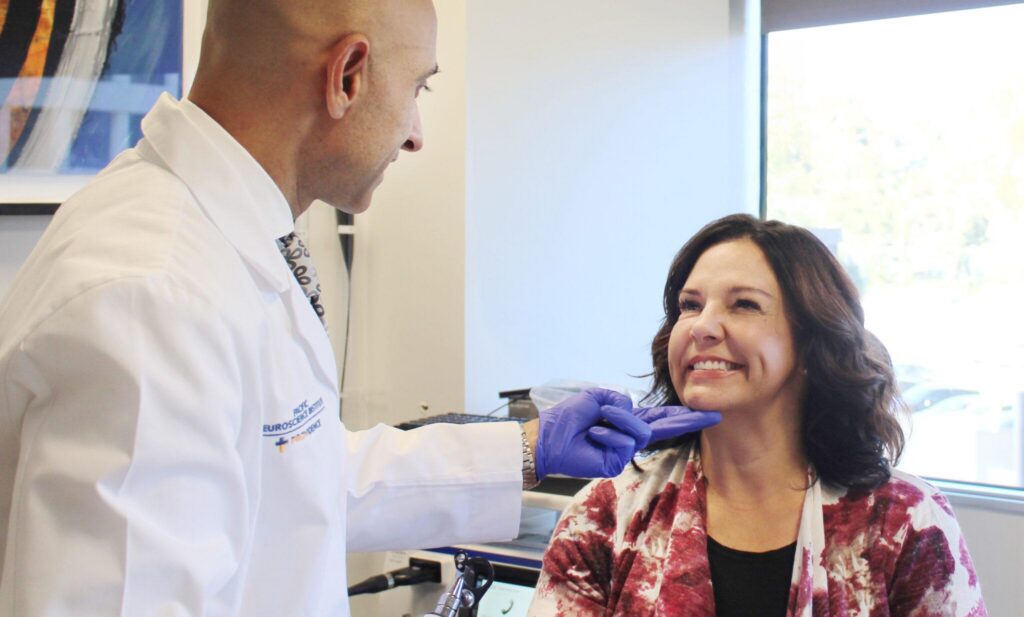
A double board-certified surgeon in Otolaryngology–Head & Neck Surgery and Facial Plastic & Reconstructive Surgery, Dr. Kochhar is among a small number of West Coast specialists offering comprehensive facial nerve care. His approach is personalized and compassionate, combining advanced microsurgery, patient education, and long-term rehabilitation. He believes that shared decision-making plays a central role in determining the best treatment path.
“A patient may come into my office, and I can tell them about all the amazing options we can perform to help them smile again,” says Dr. Kochhar. “I can explain that I’m going to replace their nonfunctional facial nerve with the nerve they use to bite down or the nerve that moves their tongue. We can even transplant a muscle from their leg to help recreate the smile on their face. However, this doesn’t really matter if the patient is more interested in protecting their eyes, so they don’t go blind. By employing a shared decision-making model, we can first address those primary goals and allow patients to appreciate the more complex options if they want to pursue them—not the other way around.”
Real Patient Journeys
For many patients, treatment for facial nerve disorders brings far-reaching physical and emotional changes.
“I suffer from facial paralysis on the right side of my face, and my self-esteem was extremely low. After seeing Dr. Kochhar, I am back to feeling beautiful and confident. From not being able to smile, I can now smile at 95%. My friends and family see the dramatic change—Dr. Kochhar truly changed my life!” – Healthgrades Review
“Relief for the first time! I’ve had Ramsay Hunt syndrome for four years that left me with nerve pain and tightness. With Dr. Kochhar’s help, I was actually able to smile again. I’ll never be back to the old me, but the now me is pretty darn good.” – Healthgrades Review
“Dr. Kochhar expertly lifted my eyebrow and connected me with a neuro-ophthalmologist who fixed my eye so I could close it again. I don’t feel the need to hide anymore. I’m forever grateful for his care.” – Yelp Review
Collaborative Expertise for the Best Outcomes

Patients benefit from a multidisciplinary network of care. “I believe any expert facial surgeon can put nerves back together,” says Dr. Kochhar, “But recovery depends on a team. The therapists, physicians, and staff who help patients rebuild confidence — that’s where true healing happens.”
At PNI, support includes:
- Facial rehabilitation therapy, focused on retraining muscles and improving coordination.
- Neuro-ophthalmology for eyelid and vision protection.
- Psychosocial guidance with neuro-oncologic psychiatry, offering specialized mental health support for patients recovering from tumor-related facial paralysis.
- Collaborative surgical planning with neurosurgeons, head and neck specialists, and facial plastic surgeons.
Education, Support, and Community Resources
The Facial Nerve Disorders clinic meets on the first and third Tuesday of every month, giving Dr. Kochhar and his team dedicated time to support patients navigating facial paralysis, synkinesis, or nerve injury.
The program also extends far beyond in-person care. PNI hosts quarterly virtual facial nerve webinars for patients and care partners, covering topics from surgical advances to mental health. Past sessions have included:
- Exploring the Link Between Facial Synkinesis and Mental Health – featuring Dr. Shiayan Yang, Vanderbilt University Medical Center
- Allografts and Repair Devices in Nerve Repair – featuring Dr. Joshua Rosenberg, Mount Sinai Facial Plastic Surgery
- Innovations in the Assessment, Education, and Management of Facial Paralysis – hosted in collaboration with the Acoustic Neuroma Association
These sessions allow individuals to learn from experts, ask questions, and connect with others experiencing similar challenges.
Advancing the Field: Annual Facial Nerve Symposium
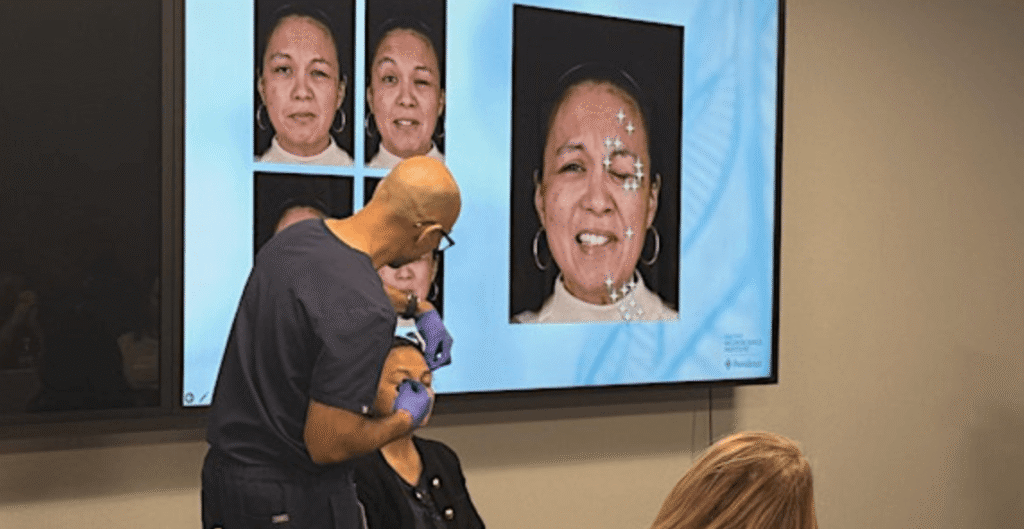
As course director for PNI’s Annual Facial Nerve Symposium, Dr. Kochhar brings together clinicians, therapists, and researchers from around the globe to share best practices in facial reanimation and rehabilitation. Established in 2024, the February event highlights the importance of collaboration and innovation in the field.
“The symposium allows us not only to teach others how to better care for their facial paralysis patients,” Dr. Kochhar explains, “But also to exchange ideas with some of the top specialists in the nation. Together, we’re raising the standard of care for patients everywhere.”
Hope, Expertise, and Compassion

From life-changing surgeries to small but meaningful improvements, the Facial Nerve Disorders Program is helping patients rediscover movement, confidence, and connection. For many, that restored ability to smile again represents much more than healing — it’s the return of joy, identity, and self-assurance.
A happy patient said, “Dr. Kochhar is very kind, caring, and thoughtful. Thanks to him and his colleagues, I don’t feel the need to hide anymore. I’m so grateful to be in his care.”
To learn more about the Facial Nerve Disorders Program at the Facial Disorders Center, contact us at 310-829-8701.