Rathke’s Cleft Cyst
What is Rathke’s Cleft Cyst?
Overview
Rathke’s cleft cysts (RCC) are not true tumors or neoplasms; instead they are benign developmental cysts.
Rathke’s cleft cysts, a remarkable anomaly originating from embryonic tissue remnants, emerge deep within the recesses of the pituitary gland. Formed during the early stages of development, the cyst emerges from the Rathke’s pouch—a critical structure responsible for the formation of the pituitary gland. Rathke’s pouch eventually forms the anterior lobe, pars intermedia and pars tuberalis, of the pituitary gland. This pouch normally closes in fetal development, but a remnant often persists as a cleft that lies between the anterior and posterior lobes of the pituitary gland. Occasionally, this remnant enlarges to form a cyst.
Rathke’s cleft cysts are fluid-filled masses arising within or above the pituitary gland and may cause loss of hormonal function, headaches, and in some instances, vision loss.
It’s important to note that RCC is classified as a noncancerous (benign) developmental cyst, making it distinct from other pituitary tumors. While the cyst’s presence may not be immediately apparent, it can significantly impact hormone production and lead to various pituitary gland dysfunctions.
Who is Affected?
Symptomatic Rathke’s cleft cysts are relatively common pituitary lesions, accounting for 5-10% of surgically removed pituitary masses. Rathke cleft cysts can be seen at any age, although most are identified in adults. However, many intrasellar Rathke’s cleft cysts that are within the pituitary gland may be quite small, are usually asymptomatic and are found incidentally at autopsy or on a magnetic resonance imaging (MRI) scan.
Rathke’s Cleft Cyst Symptoms & Causes
Symptoms
Unraveling the mysteries of Rathke’s cleft cyst requires awareness of its associated symptoms.
Individuals with Rathke’s cleft cyst may experience a range of manifestations, including:
- Debilitating headaches
- Changes in vision
- Disruptions in hormonal balance
- Pituitary gland dysfunction
Causes
Rathke’s cleft cysts are developmental anomalies resulting from incomplete closure of Rathke’s pouch during fetal development. They are not caused by tumors, infections, or injuries.
When to See a Doctor
Contact our clinics and seek medical evaluation if you experience:
- Frequent or worsening headaches
- Changes in vision (blurriness, double vision, or loss of peripheral vision)
- Symptoms of hormone imbalance (e.g., fatigue, weight changes, irregular periods)
- Sudden severe headache or vision changes, which may indicate a ruptured cyst
Rathke’s Cleft Cyst Diagnosis
Prompt diagnosis is crucial, involving a comprehensive approach that combines meticulous physical examinations, advanced imaging studies such as magnetic resonance imaging (MRI) and computed tomography (CT) scans, as well as hormone level tests.
The typical means of visualizing a Rathke’s cleft cysts is with an MRI or a computer tomography (CT) scan of the pituitary region performed without and with contrast. A complete pituitary hormonal blood evaluation should also be performed.
Other possible diagnoses to consider when a cystic mass is seen in the area of the pituitary include a cystic pituitary adenoma, craniopharyngioma or arachnoid cyst.
Rathke’s Cleft Cyst Treatment & Outcomes
Treatment Options
Observation: Over half of all Rathke’s cleft cysts seen in our practice are incidental findings, cause no symptoms or hormonal problems, and require no treatment. They can be simply “followed” with regular MRIs every year or so.
Surgery: However, for patients with a symptomatic Rathke’s cleft cyst (typically larger being greater than 1 cm in maximal diameter), endoscopic endonasal surgical removal (via the nose) is the treatment of choice. The goal of surgery is to completely remove the cyst contents while improving or preserving pituitary function vision and alleviating headache and visual loss if present. Attempts to remove the cyst lining should be avoided because this can result in pituitary gland damage. A complete removal of Rathke’s cleft cysts is possible in 80-95% of cases although they can recur at a rate of 5 – 15% over 5 to 10 years.
Fortunately, there have been major technical advances in this surgical approach, including use of high-definition endoscopy, surgical navigation techniques and more effective skull base closure methods.
Patient Outcomes
Most patients experience significant improvement in headaches, vision, and hormonal function after surgery.
- Recovery: Most patients are out of bed and eating the day after surgery, with hospital discharge typically within 1–2 days.
- Recurrence: The recurrence rate is low (1% per year), but long-term follow-up with MRI scans is recommended.
Managing Rathke’s Cleft Cyst
Even after surgery, ongoing follow-up is important. This may include:
Regular Imaging
(MRI) to monitor for recurrence.
Endocrinology Evaluations
To assess and manage pituitary function.
Visual Assessments
If vision was affected.
Participation in Support Groups
For patients with pituitary disorders.
Meet our Expert Specialists & Surgeons
At the Pacific Pituitary Disorder Center our doctors and specialists have years of experience treating Rathke’s cleft cyst and other pituitary disorders that are complex in their diagnosis and treatment, and warrant a team approach of experienced specialists to achieve optimal outcomes. From diagnosis to treatment, as well as education and support, we are here for you.
Experience Compassionate, Expert Care
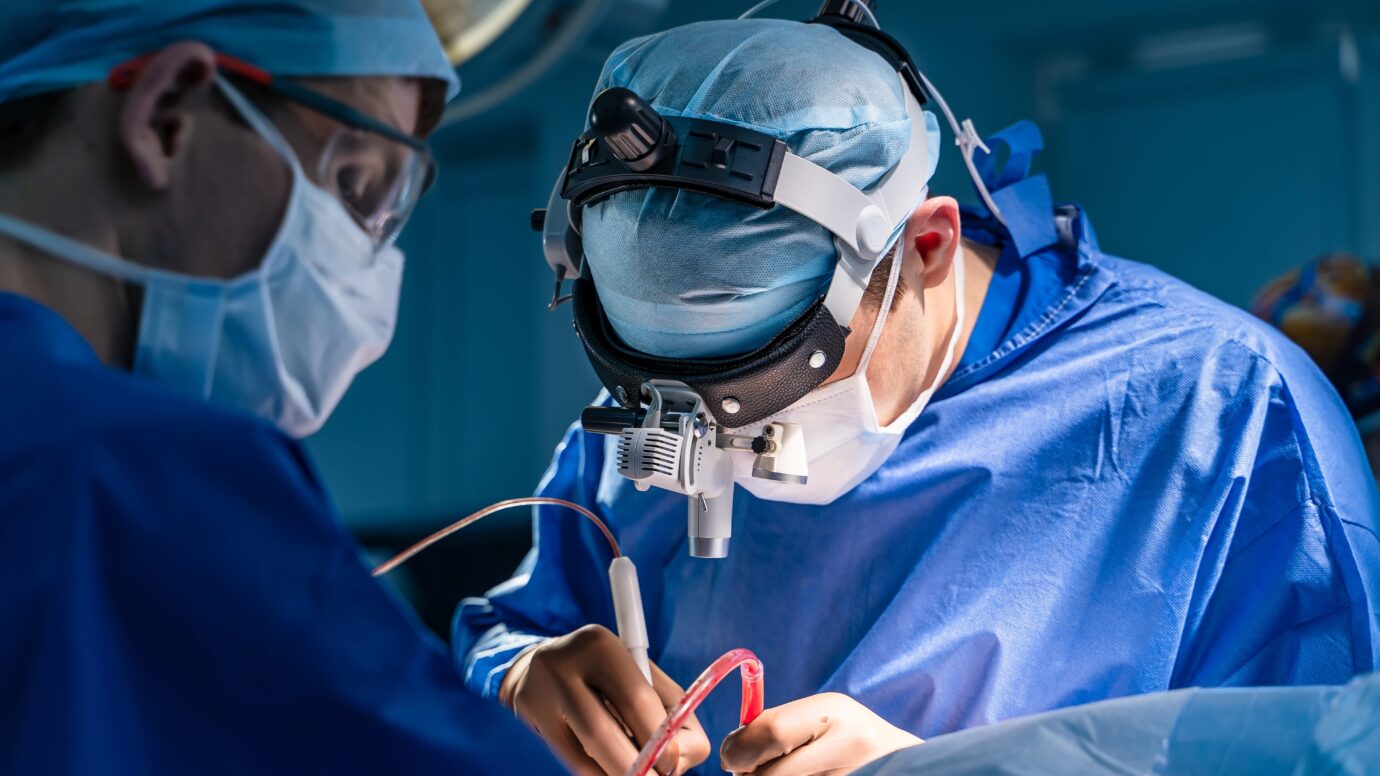
At Pacific Neuroscience Institute, our multidisciplinary team of neurosurgeons, endocrinologists, and specialists collaborate to provide a thorough evaluation, ensuring accurate diagnosis and tailored treatment plans. At the Pacific Pituitary Disorders Center, we have one of the world’s largest experiences in transsphenoidal endoscopic endonasal surgery. By incorporating leading-edge technology and instrumentation with proven surgical experience of over 2000 endonasal surgeries, we make Rathke’s cleft cyst surgery safer, less invasive and more effective. We also have a large surgical experience treating patients who have had prior surgery for a RCC.
Learn More About Rathke’s Cleft Cyst
Surgery is typically considered for cysts larger than 1 cm or those causing symptoms.
Indirectly, yes. Hormonal imbalances and chronic headaches can impact mood and emotional health.
Headaches are often pressure-like or persistent and may worsen with cyst enlargement.
Most are not life-threatening, but larger cysts can cause vision loss, hormonal dysfunction, or sudden rupture, which may require urgent treatment.
Yes. If the cyst affects pituitary hormone production, it can lead to weight changes, fatigue, and other metabolic issues.
Yes. Recurrence occurs in about 5–15% of patients, making follow-up imaging important.
Most patients are walking and eating the next day and are discharged after 1–2 days in the hospital.
Usually not – in some cases it can grow significantly and cause vision loss. In rare cases, in can rupture or bleed which can be a surgical emergency.
No, Rathke’s cleft cyst is not a brain tumor.
A Rathke’s cleft cyst is a benign, fluid-filled cyst that forms in the pituitary gland and originates from the remnants of the Rathke’s pouch, an embryonic structure. While Rathke’s cleft cysts are typically small and asymptomatic, they can grow 1-2 mm per year over time. When these cysts enlarge, they may press on surrounding structures, such as the pituitary gland or optic chiasm, leading to symptoms like headaches, vision problems, or hormonal imbalances. The growth of a Rathke’s cleft cyst can vary, and many remain stable or even shrink, while others may increase in size, requiring medical intervention. If symptomatic growth occurs, treatment options include surgical drainage or removal. However, not all Rathke’s cleft cysts require treatment, and regular monitoring through imaging may be sufficient in cases where they do not cause symptoms or significant growth.
Rathke’s cleft cysts are generally considered non-hereditary, as they arise sporadically during fetal development. No strong evidence suggests a genetic predisposition for developing Rathke’s cleft cysts. While certain conditions and abnormalities of the pituitary gland may have hereditary components, Rathke’s cleft cysts do not seem to follow this pattern. Most cases occur independently of family history or genetic factors, meaning they are not typically passed down through generations. The exact cause of Rathke’s cleft cysts is still unclear, but they are thought to develop as a result of embryological tissue remnants rather than inherited mutations. These cysts are usually detected incidentally and are often asymptomatic, though they can grow and cause symptoms in some individuals
It depends on the type, but often 2-3 hours.
After surgical removal of a Rathke’s cleft cyst, there is a small chance (1%/year) that the cyst could come back. Complete removal of the cyst is often challenging because of its delicate location near important structures in the brain, such as the pituitary gland and optic nerves.
In some cases, if remnants of the Rathke’s cleft cyst lining are left behind, the cyst can reform and cause symptoms again, such as headaches, vision problems, or hormonal imbalances. Recurrence rates vary, but long-term follow-up with periodic imaging, such as MRI scans, is generally recommended to monitor for potential regrowth. Although Rathke’s cleft cysts can recur, they do not always regrow after removal, especially when carefully removed with appropriate surgical techniques.
Resources

Get Expert Care from Leading Specialists
If you’ve been diagnosed with a Rathke’s cleft cyst, our team of neurosurgeons and endocrinologists can provide a comprehensive evaluation and personalized treatment plan. Whether you need observation, surgery, or a second opinion, we’re here to help.