Acoustic Neuroma
What is Acoustic Neuroma?
Overview
Acoustic Neuroma (AN), also known as vestibular schwannoma, is a relatively rare, benign (noncancerous) skull base tumor that arises from the eighth cranial nerve (vestibulo-cochlear nerve). It affects approximately 1 in 100,000 people per year.
Each patient may experience acoustic neuroma differently, but the most common early symptom is unilateral hearing loss, often accompanied by tinnitus (ringing in the ear). As the tumor grows, it compresses adjacent nerves and brain structures, leading to symptoms such as dizziness, imbalance, facial numbness or weakness, and in rare cases, difficulty swallowing or facial paralysis. Very large tumors can compress the cerebellum and brainstem, making them potentially life-threatening if untreated.
At Pacific Neuroscience Institute (PNI), our multidisciplinary team of otology specialists and neurosurgeons create personalized treatment plans. When surgery is indicated, we utilize minimally invasive keyhole and endoscopic techniques that are effective for most symptomatic tumors, helping to preserve function and reduce recovery time.
Who is Affected?
The only definitive environmental risk factor for acoustic neuroma is exposure to ionizing radiation to the head.
Genetically, acoustic neuromas may be associated with neurofibromatosis type 2 (NF2)—a rare genetic disorder characterized by bilateral acoustic neuromas. People with NF2 usually present at a younger age and may also have other nervous system tumors.
Acoustic Neuroma Symptoms & Causes
Symptoms
Patients tend to experience symptoms in accordance with the size of the tumor, although that is not always the case. In general, smaller acoustic neuromas cause fewer symptoms than larger ones. Based on tumor size and compression severity, acoustic neuroma symptoms include:
- Hearing loss in one ear
- Tinnitus (ringing)
- Dizziness
- Imbalance
- Coordination difficulties
- Facial numbness
- Facial tingling
- Difficulty swallowing
- Facial weakness or paralysis may occur with very large tumors
Causes
Acoustic neuromas develop from an overproduction of Schwann cells, which form the myelin sheath that insulates nerves. These tumors specifically arise from the vestibular portion of the eighth cranial nerve, which is responsible for balance and hearing.
As the tumor grows, it may protrude into the internal auditory canal, which also contains the facial nerve, cochlear (auditory) nerve, and the vestibular (balance) nerves causing additional neurological symptoms.
When to See a Doctor
Prompt evaluation can help rule out serious conditions and preserve hearing and nerve function. See a specialist if you experience:
- Gradual or sudden hearing loss in one ear
- Persistent tinnitus
- Issues with balance or unexplained dizziness
- Facial numbness, tingling, or weakness
Acoustic Neuroma Diagnosis
Acoustic neuromas are best diagnosed using:
- MRI with gadolinium contrast – the gold standard for identifying tumors of the internal auditory canal and cerebellopontine angle
- MRI of the internal auditory canals (IAC) – particularly useful for smaller tumors
- CT scans – helpful in specific cases, such as when MRI is contraindicated
Additional testing may include:
- Audiograms – to assess hearing function
- CT or MR angiography – to evaluate adjacent blood vessels, especially for surgical planning
Acoustic Neuroma Treatment & Outcomes
Treatment Options
Our team considers all aspects of disease presentation to provide a comprehensive, personalized, management plan.
Patient treatment falls into three categories:
- Observation
- Radiosurgery and fractionated radiation
- Minimally invasive surgery
Our conservative course of action is regular observation for patients who have small tumors (less than 2 cm) and who are experiencing few symptoms that are not affecting hearing or quality of life. This involves a second MRI 6 months after diagnosis, followed by annual imaging to monitor tumor size, growth, and symptoms. These tumors may appear to remain unchanged over many years but It is important to note however that hearing loss often progresses even though small tumors may not show any growth.
For larger or symptomatic tumors that require a more aggressive approach, patients may receive advanced-technology focused radiosurgery or stereotactic radiotherapy, or fractionated radiation which targets tumor tissue while sparing the surrounding areas of healthy brain. This nonsurgical treatment is typically done in an outpatient setting where radiation may be administered as a single dose or in multiple or fractionated doses.
For those who may be candidates for minimally invasive surgery, our team of experienced surgeons use keyhole and endoscopic approaches to make acoustic neuroma surgery safer, less invasive, and more effective to optimize clinical outcomes.
For tumors under 2.5 cm, either surgery or radiosurgery are reasonable treatment options. For tumors over 2.5 cm, surgical removal is generally recommended.
Treatment for acoustic neuromas by surgical removal is through a keyhole retrosigmoid craniotomy, a middle cranial fossa, or a translabyrinthine minimally invasive route using an endoscope and micro-instrumentation. The choice of approach depends upon the tumor location. Tumor adherence to critical structures dictates how much tumor can be safely removed, and in some cases, not all tumor tissue can be removed. In some patients in whom only a sub-total tumor removal is possible through neurosurgery, radiosurgery or stereotactic radiotherapy may be effectively used to control further tumor growth. Chemotherapy is generally not used for treating acoustic neuromas.
- The retrosigmoid approach to treat acoustic neuroma (also known as the retromastoid approach) uses a small window behind the ear to reach and remove the acoustic neuroma. This approach is augmented with the use of the endoscope, resulting in minimal cosmetic or soft-tissue damage and relatively quick patient recovery. In this approach the inner ear structures can remain intact to preserve hearing. Patients with functional hearing and small tumors (under 2 cm) that do not extend deep into the internal auditory canal can benefit from this approach. For patients with a history of headaches we avoid retrosigmoid surgery as there is a low risk of chronic headache with this approach.
- The middle cranial fossa surgical approach for acoustic neuroma involves a small opening above the ear for small tumors (less than 1.7 cm) that are typically confined to the internal auditory canal. This procedure aims for long-term hearing preservation in patients with functional hearing. Using this minimally invasive approach, the neuroma can be reached from above without disturbing the structures of the inner ear.
- The translabyrinthine approach for acoustic neuroma is performed through a small incision behind the ear. This treatment modality offers the most direct route and widest view of the skull base. It is the preferred approach for larger tumors (greater than 2 cm) where hearing loss has progressed or where hearing preservation is unlikely.
The benefits of minimally invasive surgery compared to open surgery are:
- Fewer headaches
- Less disruption to surrounding brain tissue
- 1-2 nights in the hospital
- Less disruption to patients’ day to day life
When surgical treatment is necessary, factors such as tumor size, the microsurgical technique used, and the use of intraoperative nerve monitoring play crucial roles in minimizing the risk of facial nerve paralysis after surgery. It is important to discuss with your physician the potential risk of facial nerve injury. It is recommended to consult with our facial nerve reconstructive surgeon to understand your options for facial nerve preservation or tumor-related facial paralysis rehabilitation.
Patient Outcomes
Outcomes depend on tumor size, location, and treatment modality. With advanced surgical and radiosurgical techniques:
- Tumor control rates exceed 95%
- Many patients maintain or regain balance
- Hearing preservation is possible in select cases
- Facial nerve preservation is a primary surgical goal
Managing Acoustic Neuroma
You will be supported by our expanded team including experts in facial reanimation, neurology, hearing and balance, physical therapy and rehabilitation, and psychosocial support.
In some patients with AN, facial paralysis may develop prior to diagnosis/treatment due to compression of the facial nerve. This can be because of the size and/or location of the tumor since the facial nerve (7th cranial nerve) and 8th cranial nerve are located very close together. If the acoustic neuroma has caused facial nerve damage resulting in facial paralysis, our facial reanimation and plastics reconstructive surgeon is also included in the treatment team. Treatment options for AN-related facial paralysis may vary and are dependent on the health of the facial nerve. We recommend a consultation with our facial reanimation expert right after surgery to create a plan to manage the paralysis.
Balance therapy is an integrated component of your care. Vestibular status is assessed before and after your procedure by physical therapists with expertise in issues related to balance and dizziness. Our vestibular rehabilitation program is composed of a series of balance training exercises that are individually tailored for each patient. These exercises promote the patient’s vestibular system to compensate for the balance disorder. Our specialists work in conjunction with the Performance Therapy department at Providence Saint John’s Health Center to provide balance therapy services to our patients.
Meet our Expert Specialists & Surgeons








Experience Compassionate, Expert Care

At Pacific Neuroscience Institute, our mission is to deliver world-class care with compassion. WIth our extensive experience in diagnosing and treating patients with acoustic neuromas, we emphasize shared decision-making and expert multidisciplinary evaluation to guide each patient’s treatment journey.
Learn More About Acoustic Neuroma
Both tumors are types of schwannomas that arise from Schwann cells, the cells that form the protective covering around nerves. However, these tumors develop on different cranial nerves:
- Acoustic neuroma (vestibular schwannoma): Develops on the vestibulocochlear nerve, which is responsible for hearing and balance. Common symptoms include hearing loss, tinnitus (ringing in the ears), dizziness, and balance problems.
- Trigeminal schwannoma: Develops on the trigeminal nerve, which provides sensation to the face and controls the muscles used for chewing. Symptoms more commonly include facial numbness, facial pain, tingling, or weakness when chewing.
While both tumors are typically benign and slow-growing, acoustic neuroma refers specifically to a schwannoma of the vestibulocochlear nerve (CN VIII). A trigeminal schwannoma is a distinct type of cranial nerve schwannoma and is not classified as an acoustic neuroma.
Some acoustic neuromas can grow very large and cause major brain / brainstem compression which could affect major neurological problems over time.
Acoustic neuromas can cause hearing loss, facial numbness, pain or weakness, headaches, imbalance, swallowing difficulties and weakness.
Large acoustic neuromas are treated with surgical resection. Small acoustic neuromas can be treated with surgery or stereotactic radiosurgery, though some can be observed to see if they may grow or cause neurological deficits.
Some can cause headaches and/or facial pain.
No, acoustic neuromas don’t spread.
Acoustic neuromas are diagnosed by MRI and audiogram.
A nerve sheath tumor is treated by surgical resection (removal).
Yes, most often acoustic neuromas are benign (noncancerous).
Yes, acoustic neuroma is considered a brain tumor.
Acoustic neuromas are not cancerous.
Yes, acoustic neuroma patients are at risk for facial nerve paralysis. Factors include size of tumor, location, and growth rate. Some patients may develop facial paralysis prior to diagnosis/treatment due to compression of the facial nerve. If the facial nerve is injured as a result of removal of the acoustic neuroma, patients may experience facial paralysis after surgery and it is essential to consult a facial reanimation expert immediately and create a plan to manage the paralysis.
Excellent when detected early and managed appropriately. Most patients enjoy good long-term outcomes and quality of life.
Resources
Get Expert Care from Leading Specialists
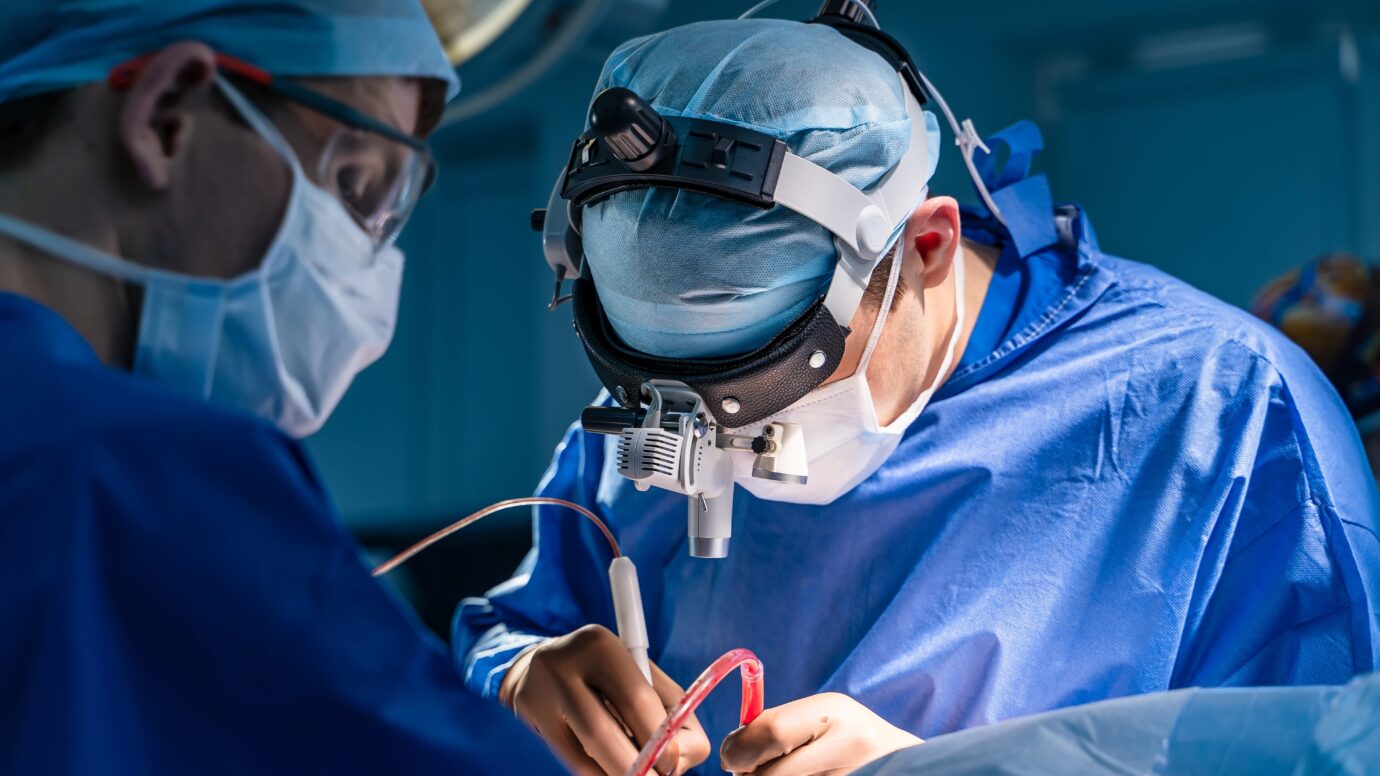
If you’ve been diagnosed with an acoustic neuroma, our experienced team is here to provide a thorough evaluation and help you navigate the best treatment options—whether that’s observation, surgery, or radiation.
Written and reviewed by:
The Pacific Neuroscience medical and editorial team
We are a highly specialized team of medical professionals with extensive neurological and cranial disorder knowledge, expertise and writing experience.
Last Updated: