Entropion and Ectropion

Overview

What is Entropion and Ectropion?

Overview

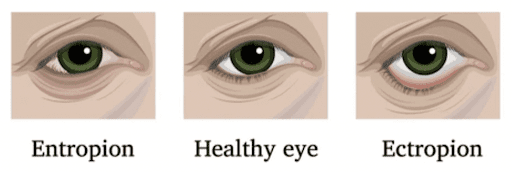
Entropion and Ectropion are conditions in which the eyelid is malpositioned.

Entropion is characterized by the inversion or inward turning of the eyelid. This malposition causes the eyelashes and the skin to irritate and rub against the cornea, leading to discomfort, redness, and potential corneal damage if left untreated.

Ectropion, conversely, involves the outward turning of the eyelid margin. This condition leaves the inner surface of the eyelid exposed, leading to issues like excessive tearing, dryness, irritation, and susceptibility to infections due to inadequate tear drainage.

Both conditions interfere with the normal protective and lubricating functions of the eyelids, potentially leading to significant ocular surface problems if untreated.
Who is Affected?

Entropion and ectropion most commonly affect older adults, particularly those over age 60, due to age-related weakening and laxity of eyelid tissues. Both men and women are equally susceptible.

Other groups at higher risk include:

  • Individuals with a history of eyelid trauma or surgery.
  • People with facial nerve palsy or neurological conditions affecting eyelid muscles.
  • Patients with chronic inflammatory or scarring disorders around the eyes (e.g., cicatricial entropion).
  • Rarely, infants may be born with congenital forms of entropion or ectropion.
Symptoms + Causes

Entropion and Ectropion Symptomsrn& Causes

Symptoms

Symptoms can vary but commonly include:

  • Eye irritation, redness, and tearing
  • Sensation of a foreign body or grit in the eye
  • Increased sensitivity to light and wind
  • Recurrent eye infections or discharge
  • Corneal damage causing blurred vision or pain in advanced cases
  • Excessive tearing or watery eyes
  • Irritation and burning sensation
  • Recurrent conjunctivitis or infections
  • Exposure keratitis (corneal dryness due to poor eyelid closure)
  • Dryness, redness, and crusting of the eyelid margin

Causes

Entropion:

  • Age-related changes: The most common cause, where weakening and laxity of eyelid muscles and tendons cause the eyelid to roll inward.
  • Cicatricial entropion: Scarring of the inner eyelid from infections, trauma, or inflammatory diseases causing contraction and inward turning.
  • Spastic entropion: Resulting from involuntary spasms of the eyelid muscles, often due to irritation or inflammation.
  • Congenital entropion: A rare form present at birth due to abnormal eyelid development.

Ectropion:

  • Age-related laxity: The most common cause, where tissues become loose and sag.
  • Paralytic ectropion: Due to facial nerve palsy (e.g., Bell’s palsy) causing muscle weakness and poor eyelid closure.
  • Cicatricial ectropion: Scarring from burns, trauma, or surgery that pulls the eyelid outward.
  • Mechanical ectropion: Caused by tumors or growths that weigh down or pull the eyelid.
  • Congenital ectropion: Rare and present at birth.

When to See a Doctor

Early treatment helps prevent complications like corneal ulcers or chronic infections that can threaten vision. Seek prompt ophthalmologic evaluation if you experience:

  • Persistent eye irritation, redness, or pain
  • Excessive tearing or dryness
  • Sensation of something rubbing in the eye
  • Changes in vision or sensitivity to light
  • Signs of infection such as discharge, swelling, or crusting
Diagnosis

Entropion and Ectropion Diagnosis

An ophthalmologist will perform a detailed eye exam assessing:

  • Eyelid position and degree of inversion or eversion
  • Eyelid laxity and muscle tone
  • Corneal surface for damage or staining
  • Tear film and drainage function
  • Facial nerve function if paralysis is suspected

In some cases, photographs or imaging studies may be used to assist with surgical planning.

Treatment + Outcomes

Entropion and Ectropion Treatmentrn& Outcomes

Treatment Options

Treatment options vary depending on the severity.

  • Lubricating eye drops and ointments to protect the cornea
  • Eyelid taping or temporary sutures to reposition the eyelid
  • Moisture goggles or humidifiers to reduce dryness
  • Treating underlying inflammation or infections

Surgery is highly effective at restoring eyelid position, alleviating symptoms, and preventing corneal complications.

  • Entropion surgery: Techniques such as eyelid retractor reinsertion, horizontal tightening (e.g., tarsal strip procedure), or spastic entropion correction aim to reposition the eyelid and prevent inward turning.
  • Ectropion surgery: Procedures to tighten the eyelid horizontally, tighten canthal tendons, or graft skin/mucous membranes if scarring is present.

Patient Outcomes

Most patients experience significant relief and restoration of eyelid function after surgery, with low recurrence rates. Early intervention helps preserve vision and improve comfort. Postoperative care includes protecting the eye and monitoring for infection or eyelid position changes.

Managing Your Condition

Managing Entropion and Ectropion

While some instances of entropion and ectropion may be age-related and challenging to prevent, certain measures can mitigate the risk or severity:

Eye Protection

Protect your eyes from trauma or environmental irritants like wind and dust.

Eye Lubricants

Use prescribed lubricants regularly to keep the eyes moist.

Follow Ups

Follow up with your ophthalmologist routinely.

Manage Underlying Conditions

Manage underlying neurological or inflammatory conditions promptly.

Avoid Touching Eyes

Avoid rubbing or touching your eyes to prevent irritation or infection.

Care at PNI

Experience Compassionate, Expert Care
At Pacific Neuroscience Institute, we combine expert clinical evaluation with leading-edge surgical techniques in a patient-centered environment. Our dedicated team has extensive experience managing complex eyelid malpositions with outstanding outcomes. Our facility is equipped with advanced microsurgical tools and post-op care resources to support your recovery. Our team includes oculoplastic surgeons and neuro-ophthalmologists specializing in eyelid disorders, offering expert diagnosis and advanced surgical treatments tailored to your needs.

FAQs + Resources

Learn More About Entropion and Ectropion

With timely treatment, prognosis is excellent. Surgical correction is highly effective in restoring eyelid function and preventing vision-threatening complications.

Age-related (involutional), spastic, cicatricial (due to scarring), and congenital.

Mild cases may be managed conservatively, but most moderate or severe cases require surgical correction to reposition the eyelid.

Persistent irritation can lead to corneal abrasions, ulcers, infections, and potentially vision loss.

Congenital entropion is rare but can occur as a birth defect. Most cases are age-related.

Temporary measures include lubricating drops, ointments, and taping the eyelid, but surgery is the definitive treatment.

Both can cause serious eye problems if untreated; entropion more commonly damages the cornea, while ectropion leads to dryness and infections.

Surgery is typically done under local anesthesia with minimal discomfort during and after the procedure.

Temporary non-surgical measures as noted, but these do not correct the underlying problem.

Resources

Contact Us

Get Expert Care from Leading Specialists

If you experience symptoms of entropion or ectropion, early evaluation by an oculoplastic specialist can prevent complications and improve your quality of life. Our team is here to provide expert diagnosis and personalized treatment plans.

Written and reviewed by:
The Pacific Neuroscience medical and editorial team
We are a highly specialized team of medical professionals with extensive neurological and cranial disorder knowledge, expertise and writing experience.

Last Updated: