Ramsay Hunt Syndrome
What is Ramsay Hunt Syndrome?
Overview
Ramsay Hunt syndrome (RHS) is a complication of a shingles infection affecting the facial nerve that leads to unilateral facial paralysis.
Shingles is caused by the same virus that causes chickenpox (varicella zoster virus, or VZV). When a child has chickenpox, they will heal and recover, but the virus continues to live in the nerves that were infected, including the facial nerve. Most patients will not develop RHS or shingles, however, if it is reactivated, the facial nerve may become inflamed and irritated and new symptoms will appear.
Who is Affected?
Ramsay Hunt syndrome can affect anyone who has had chickenpox. It is more common in adults over age 50, but it can occur at any age, particularly in those who are immunosuppressed due to chronic illness, certain medications, or stress. It is slightly more common in people who have experienced significant emotional or physical stress or who have conditions that weaken the immune system.
Ramsay Hunt Syndrome Symptomsrn& Causes
Symptoms
Symptoms of Ramsay Hunt syndrome may vary from person to person. However, some or all of these may be present at different times.
- Blisters or a rash in or around the ear. The blisters may also appear on the face or in the mouth.
- Severe pain/burning sensation associated with the blisters/rash.
- Paralysis or weakness on the affected side, which causes the face to droop.
- Inability to close the eye or blink on the affected side.
- Metallic/Altered taste on half of the tongue.
- Inability to smile or frown on the affected side.
- Difficulty speaking, eating, and drinking on the affected side due to weakness in the lip and cheek.
- Hearing loss on the affected side.
- Dizziness or vertigo.
- Tinnitus, or ringing in the ear, on the affected side.
Causes
Ramsay Hunt syndrome can affect anyone who has had chickenpox. It is more common in adults over age 50, but it can occur at any age, particularly in those who are immunosuppressed due to chronic illness, certain medications, or stress. It is slightly more common in people who have experienced significant emotional or physical stress or who have conditions that weaken the immune system.
When to See a Doctor
Prompt treatment is critical — starting antivirals and steroids within 72 hours significantly improves the chance of full recovery. Seek medical attention immediately if you experience:
- Sudden facial weakness or drooping
- Painful rash or blisters in or near the ear
- Hearing loss, dizziness, or severe ear pain
- Difficulty closing your eye (to prevent corneal injury)
Ramsay Hunt Syndrome Diagnosis
Since Ramsay Hunt syndrome has a specific pattern and presentation, physicians can often diagnose it based on a thorough medical history, a physical exam, and the disorder’s distinctive signs and symptoms. To confirm the diagnosis, your doctor might take a sample of fluid from one of the rash blisters in your ear for testing.
You may expect the following during a consultation with your doctor:
- Complete history and physical examination
- Examination of the facial nerve function (such as eye closure, blink, smile)
- A blood test to evaluate for the presence of the antibodies to the varicella zoster virus
- Hearing and balance testing
- Magnetic Resonance Imaging (MRI) to evaluate inflammation along the facial nerve and to eliminate other causes of facial paralysis
- Neuromuscular Testing can be performed to assess facial nerve function and to assess if the nerve is damaged. This is not done for diagnosis but can assist with prognosis and/or treatment planning.
Ramsay Hunt Syndrome Treatmentrn& Outcomes
Treatment Options
Anyone who develops facial paralysis from Ramsay Hunt syndrome should be treated promptly, ideally within 72 hours of symptom onset. Unlike Bell’s palsy, patients with RHS may also require topical lotion/creams and/or pain medication to treat the rash and associated pain. If patients experience severe nausea due to dizziness they may also require anti-nausea medications. In rare instances, the symptoms can be so severe that hospitalization is required. However, this decision should be made by a medical expert.
A typical treatment regimen should include the following:
- Initiate 60mg Prednisone for 5 days then taper down over 5 days (10 days total)
- Initiate antiviral therapy within 72 hours
- Enforce eye protection with artificial tears, lubrication and moisture chamber
- Pain medication
- Topical lotion/cream
- Anti-nausea medication if this is associated with dizziness/nausea
Patient Outcomes
- Early treatment matters. When treated within 72 hours, around 70% of patients experience a near-complete recovery.
- Delayed treatment lowers the chance of full recovery to about 50%.
- Some patients may develop long-term complications, such as persistent facial weakness, synkinesis (involuntary muscle movements), or chronic pain.
- The severity of initial paralysis often predicts recovery: patients with milder symptoms typically recover faster and more completely.
Managing Ramsay Hunt Syndrome
Follow-Up Care
Regular visits with your doctor or a facial nerve specialist are essential to track recovery and prevent complications.
Eye Care
If you cannot fully close your eye, protect it with lubricating drops, ointments, or taping at night.
Rehabilitation
Facial physical therapy can help maintain muscle function and improve symmetry.
Emotional Support
Chronic pain, facial weakness, or changes in appearance can affect emotional well-being; support groups or counseling may help.
Meet our Expert Specialists & Surgeons

Experience Compassionate, Expert Care
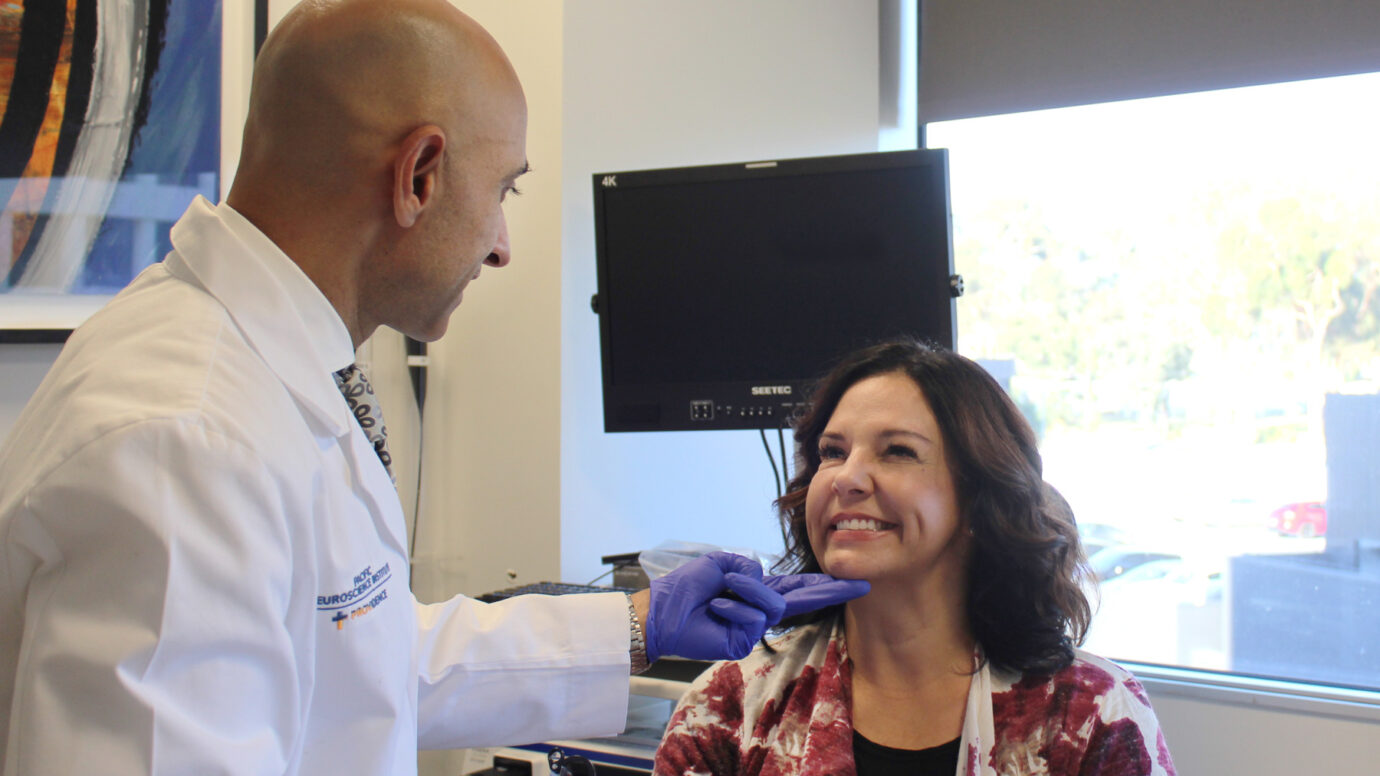
At Pacific Neuroscience Institute, our multidisciplinary team offers advanced diagnostics, individualized treatment plans, and comprehensive rehabilitation for patients with Ramsay Hunt syndrome. We provide both in-person and virtual consultations for patients across California and the western United States.
Our Facial Nerve Disorders Program, led by Dr. Amit Kochhar, brings together highly skilled specialists in otolaryngology, neurology, and facial plastic surgery to provide comprehensive care for patients with Ramsay Hunt syndrome and other facial paralysis disorders.
Learn More About Ramsay Hunt Syndrome
No. Ramsay Hunt syndrome is not something that someone who is infected can transmit to another person. However, if you have never had chickenpox or have not been vaccinated, you can become infected with chickenpox from close contact with an open rash or a blister that is on a person with RHS.
If someone is immunosuppressed, they are less able to combat infection and the body then becomes at risk for reactivation of the viruses like VZV.
Some medications are known to cause immunosuppression. For instance, chronic steroid use or medications used to treat autoimmune disorders can impair the body’s immune system. Studies have also shown that people who experience significant stress are more likely to suffer from infections than others who do not have significant stress. Thus, it is believed that a relationship exists between stress and RHS or shingles.
The majority (70%) of patients with Ramsay Hunt syndrome who receive high dose steroids and antiviral treatment within 72 hours will experience a near full recovery. If treatment is not given within 72 hours , the likelihood of making a complete recovery is reduced to approximately 50%.
Unlike Bell’s palsy, in RHS, the severity of symptoms is more closely related to the length of time that it takes to recover. If someone has more severe symptoms, there is a lower chance that normal function will be regained. Conversely, if one has mild symptoms, recovery should take place within a few weeks.
Not directly. Ramsay Hunt syndrome is caused by the reactivation of the varicella zoster virus (VZV), the same virus that causes chickenpox and shingles. However, stress can weaken the immune system, making it easier for dormant viruses like VZV to reactivate. So while stress doesn’t cause the condition on its own, it can be a contributing factor in triggering it.
No. While both conditions cause facial paralysis, they have different causes. Bell’s palsy is an idiopathic (unknown cause) inflammation of the facial nerve, whereas Ramsay Hunt syndrome is caused by the reactivation of the varicella zoster virus (shingles) affecting the facial nerve. People with Ramsay Hunt syndrome often also have ear pain, a rash or blisters near the ear, and sometimes hearing changes, which are not typical in Bell’s palsy.
Ramsay Hunt syndrome is triggered by the reactivation of the dormant varicella zoster virus in the facial nerve. This reactivation can occur for several reasons, including:
- Weakened immune system due to illness, aging, or certain medications
- Physical or emotional stress
- Other infections or health conditions that strain the immune system
Resources
Get Expert Care from Leading Specialists
If you suspect you have Ramsay Hunt syndrome, early treatment is critical. Our facial nerve specialists at Pacific Neuroscience Institute provide rapid evaluation, antiviral therapy, and multidisciplinary care to maximize your chance of full recovery.
Written and reviewed by:
The Pacific Neuroscience medical and editorial team
We are a highly specialized team of medical professionals with extensive neurological and cranial disorder knowledge, expertise and writing experience.
Last Updated: