Congenital Facial Paralysis
What is Congenital Facial Paralysis?
Overview
Congenital facial paralysis is weakness or loss of movement in the facial muscles that is present at birth or develops shortly before delivery. This condition can result from genetic, environmental, or traumatic causes.
Birth trauma is one of the most common causes, occurring when pressure on the baby’s face during delivery affects the facial nerve. This may happen from compression while passing through the birth canal or from the use of forceps or vacuum extraction during delivery.
In other cases, congenital facial paralysis may be linked to syndromes or developmental abnormalities, such as Möbius syndrome, where multiple cranial nerves and sometimes other organ systems are involved.
Who is Affected?
Congenital facial paralysis can occur in newborns of any background and may affect either one side (unilateral) or both sides (bilateral) of the face. While birth trauma–related paralysis is often temporary, syndromic or developmental cases may be more persistent and require specialized care.
Congenital Facial Paralysis Symptomsrn& Causes
Symptoms
Common signs of congenital facial paralysis include:
- Weakness or drooping of one side of the face, especially noticeable in the lower lip when crying or feeding.
- Difficulty closing one eye completely.
- Reduced or absent facial expressions.
- In Möbius syndrome, additional symptoms may include:
- Inability to move the eyes side to side.
- Difficulty swallowing or speaking.
- Limb or chest wall abnormalities.
Children with certain congenital facial nerve conditions may also have health problems involving the heart, lungs, gastrointestinal system, or kidneys. Because of this, evaluation by both pediatric specialists and facial nerve experts is important.
Causes
Causes for congenital facial paralysis are varied.
- Birth trauma: Compression or stretching of the facial nerve during labor and delivery.
- Developmental abnormalities: Incomplete formation of the facial nerve or associated brain structures.
- Genetic syndromes: Such as Möbius syndrome or hereditary neuropathies.
- Infections during pregnancy: Rare, but certain maternal illnesses can affect fetal nerve development.
- Unknown causes: In some cases, no clear reason can be identified.
When to See a Doctor
Early diagnosis helps ensure appropriate treatment and prevents complications such as eye dryness, speech delays, or social challenges later in life. Parents should seek medical evaluation as soon as possible if they notice:
- Asymmetry of the face when the baby cries or feeds.
- Difficulty closing one or both eyes.
- Feeding problems or poor weight gain.
- Limited eye movement or other developmental concerns.
Congenital Facial Paralysis Diagnosis
Gestation and birth history as well as physical exam are extremely important for the diagnosis of congenital facial paralysis. Electrophysiologic testing should be performed in the first 3 days of life.
Congenital Facial Paralysis Treatmentrn& Outcomes
Treatment Options
In many cases, congenital facial paralysis improves over time without surgery. For persistent paralysis, treatment options may include:
- Observation – for mild cases that show early improvement.
- Physical therapy – to maintain muscle tone and encourage nerve recovery.
- Surgical intervention – often performed when the child is older to allow for growth and optimal outcomes. These may include muscle transfers, fascial slings, or free muscle grafts (such as gracilis muscle transfer).
- Multidisciplinary care – involving pediatricians, ophthalmologists, speech therapists, and facial nerve surgeons.
Children generally have better skin elasticity than adults, meaning they rarely require urgent eye protection measures, as eye closure is often adequate despite paralysis. In Möbius syndrome, facial reanimation with gracilis free muscle transfer may be necessary to restore expression and function.
Patient Outcomes
Recovery of congenital facial paralysis is often good, and long-term results are best when care is provided by experienced facial nerve specialists. Prognosis varies depending on the cause:
- Birth trauma–related paralysis often resolves fully within weeks to months.
- Developmental or syndromic cases may have more persistent weakness but can improve with reconstructive surgery and therapy.
Managing Congenital Facial Paralysis
Daily management tips for parents include:
Eye Care
By using artificial tears if eyelid closure is incomplete.
Feeding Adjustments
By working with a speech or feeding therapist to ensure adequate nutrition.
Facial Exercises
As directed by a therapist to support nerve recovery.
Regular Follow-Ups
To monitor progress and decide on the timing of any surgical intervention.
Meet our Expert Specialists & Surgeons


Experience Compassionate, Expert Care
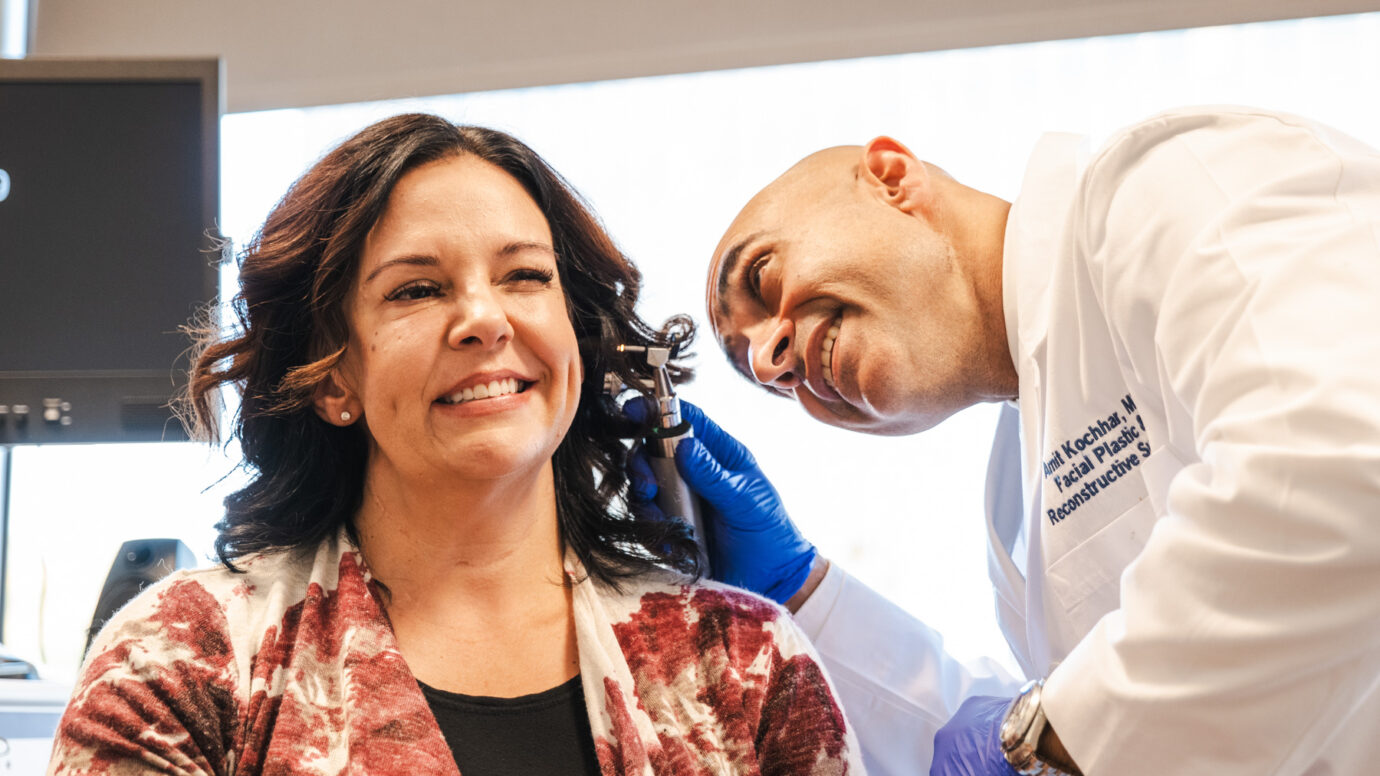
At Pacific Neuroscience Institute, our facial nerve specialists offer advanced diagnostic testing, surgical expertise, and comprehensive rehabilitation services for children with congenital facial paralysis. We work closely with pediatricians and subspecialists to provide the best possible outcomes.
Learn More About CongenitalrnFacial Paralysis
Many infants with birth trauma-related paralysis recover fully. Developmental or syndromic cases may require surgery, but outcomes can be excellent with specialized care.
It may be due to birth trauma, genetic syndromes, developmental abnormalities, or unknown factors.
Yes. Some genetic syndromes, such as Möbius syndrome, include facial paralysis as part of their presentation.
It occurs when the facial nerve or its associated brain structures are injured or malformed.
Yes, depending on the cause. Mild cases may resolve on their own; others can be treated with reconstructive surgery and therapy.
Often yes—especially in trauma-related cases. Developmental cases may not be fully reversible but can be improved with treatment.
Stress does not cause congenital facial paralysis, but it can contribute to acquired facial paralysis in adults.
Resources
Get Expert Care from Leading Specialists
If your child has signs of congenital facial paralysis, early evaluation by our facial nerve specialist can make a difference in long-term outcomes. Our team offers advanced diagnostics, surgical expertise, and compassionate care for families navigating this rare condition.
Written and reviewed by:
The Pacific Neuroscience medical and editorial team
We are a highly specialized team of medical professionals with extensive neurological and cranial disorder knowledge, expertise and writing experience.
Last Updated: