Brain Tumor Related Facial Paralysis
What is Brain Tumor-Related Facial Paralysis?
Overview
The most common brain tumor affecting facial nerve function is acoustic neuroma (AN), also called vestibular schwannoma. These benign (non-cancerous) skull base tumors arise from the Schwann cells of the 8th cranial nerve (vestibulocochlear nerve), which is responsible for hearing and balance.
Patients with Neurofibromatosis type 2 (NF2) may develop bilateral acoustic neuromas and can have multiple schwannomas throughout the body. The 8th cranial nerve runs very close to the 7th cranial nerve (facial nerve) as they exit the brainstem, making the facial nerve vulnerable to injury or compression when a tumor develops in this area.
Not all acoustic neuromas require immediate treatment. However, if treatment is recommended—especially surgery—tumor size, location, microsurgical technique, and intraoperative nerve monitoring all significantly influence the risk of facial paralysis. At Pacific Neuroscience Institute (PNI), our multidisciplinary team—including a facial nerve reconstructive surgeon—discusses facial nerve preservation strategies with each patient before treatment.
Other Brain Tumors That Can Cause Facial Paralysis
While acoustic neuroma is the most common brain tumor linked to facial nerve problems, other tumors can also cause weakness or paralysis:
- Skull Base Meningiomas – When located in the cerebellopontine angle (CPA), these tumors can press on the facial nerve as it exits the brainstem, leading to gradual or, rarely, sudden facial weakness.
- Brainstem Tumors – Tumors such as gliomas, ependymomas, or metastases involving the pons can directly affect the facial nerve nucleus, resulting in facial paralysis often accompanied by other neurological symptoms.
- Epidermoid Cysts and Other CPA Lesions – Benign but space-occupying masses in this area can entangle or compress the facial nerve.
Because the facial nerve’s pathway is long and intricate, tumors at multiple locations along its course can impact its function. Early diagnosis and a multidisciplinary approach are critical for preserving or restoring facial movement.
Who is Affected?
Brain tumor-related facial paralysis can affect anyone, but risk is higher in individuals diagnosed with:
- Acoustic neuroma (vestibular schwannoma)
- Neurofibromatosis type 2 (NF2)
- Skull base meningiomas involving the cerebellopontine angle
- Brainstem tumors involving cranial nerve nuclei
Brain Tumor-Related Facial Paralysis Symptoms & Causes
Symptoms
Facial paralysis caused by acoustic neuroma or other skull base tumors can present in different ways:
- Gradual onset – May develop slowly over weeks or months, sometimes resembling facial paralysis caused by salivary gland tumors.
- Associated with hearing loss – A strong indicator that a tumor involving the 8th cranial nerve may be present.
- Sudden onset – In rare cases, facial paralysis can occur suddenly, mimicking Bell’s palsy.
Other associated symptoms may include:
- Numbness or tingling in the face
- Balance difficulties
- Tinnitus (ringing in the ear)
- Progressive hearing loss on one side
Causes
All acoustic neuroma patients are at some level of risk for facial nerve paralysis. Risk depends on:
- Tumor size
- Tumor location
- Tumor growth rate
- Surgical approach and surgeon’s expertise
- Intraoperative facial nerve monitoring techniques
Facial paralysis can occur:
- Before treatment: From direct compression of the facial nerve by the tumor
- After surgery: If the nerve is stretched, bruised, or severed during tumor removal
- After radiosurgery: Rarely, due to delayed swelling or nerve reaction
In some patients, facial weakness appears immediately after waking from surgery, while in others, it may develop gradually over several weeks.
When to See a Doctor
Prompt diagnosis improves treatment planning and long-term outcomes. Seek immediate evaluation if you experience:
- Sudden facial drooping or weakness
- Hearing loss, especially in one ear
- New onset of facial numbness
- Difficulty closing your eye on one side
Brain Tumor-Related FacialrnParalysis Diagnosis
A thorough evaluation for suspected tumor-related facial paralysis typically includes:
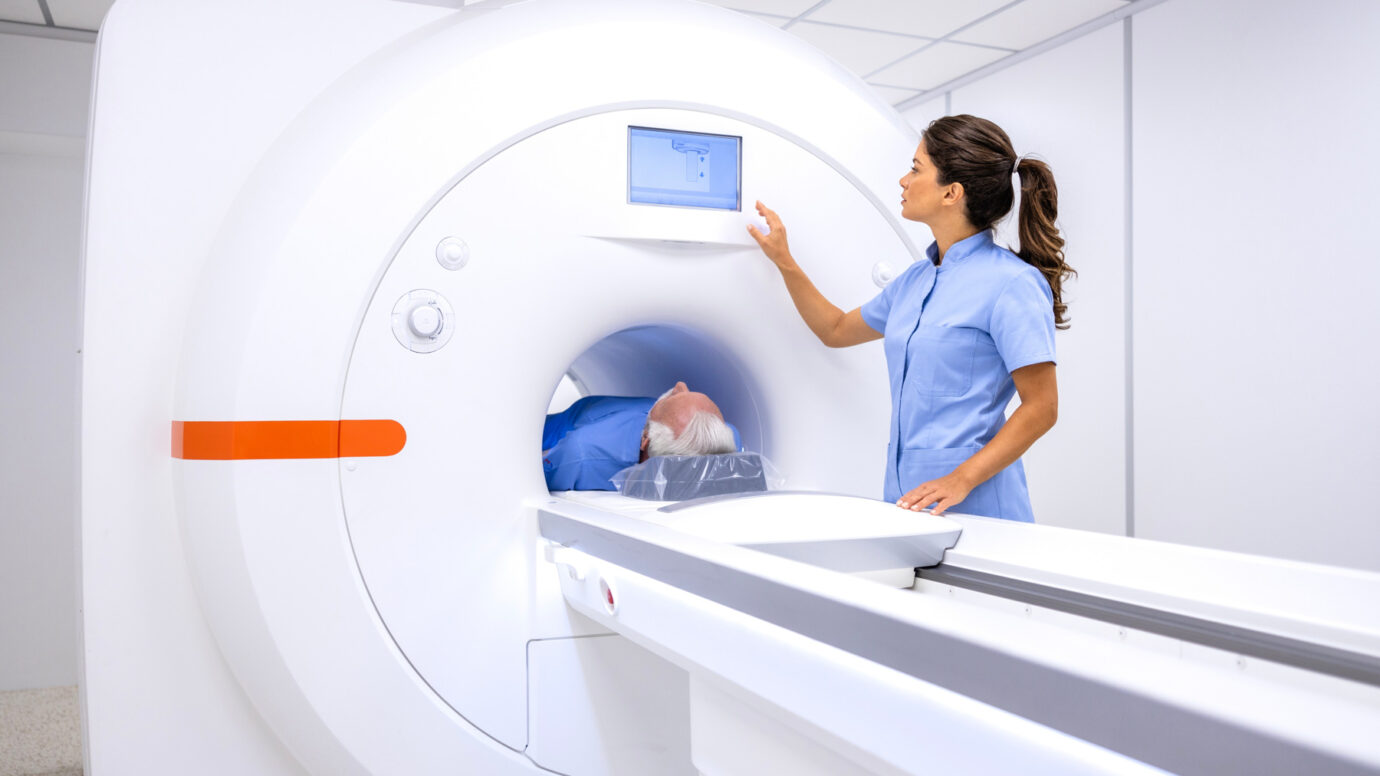
MRI of the Brain and Internal Auditory Canals
To visualize tumors and assess nerve compression.
Audiogram (Hearing Test)
To detect hearing loss patterns.
Neurological Examination
To assess facial muscle function and other cranial nerve involvement.
Brain Tumor-Related Facial Paralysis Treatment & Outcomes
Treatment Options
Treatment options for AN-related facial paralysis may vary and are dependent on the health of the facial nerve. Therefore, it is essential that you speak with an expert in facial reanimation immediately to create a plan to manage the paralysis.
Depending on the extent of facial nerve injury, and the length of time that the patient has experienced facial paralysis, we can help develop a unique patient-specific treatment plan.
Typically this will involve the following:
- Protecting your eye health and vision
- Performing serial exams to assess for improvement in facial tone and movement (if nerve is intact)
- Facial retraining and facial therapy
- Facial reanimation surgery (if the nerve is known to be cut or recovery is not expected based on exam and testing)
Patient Outcomes
If the nerve is preserved: Recovery may occur within weeks to months, though some residual weakness can persist.
If the nerve is severed: Surgical reanimation offers the best chance to restore symmetry and some movement.
Long-term outcomes depend on time from paralysis onset to intervention—earlier care leads to better results.
Managing Brain Tumor-RelatedrnFacial Paralysis
Living with facial paralysis can affect self-esteem, speech, and eating. At PNI, we offer:
- Psychological support and counseling
- Occupational therapy for daily activity adaptations
- Cosmetic and reconstructive solutions to improve appearance and function
Meet our Expert Specialists & Surgeons
Experience Compassionate, Expert Care
At the Pacific Neuroscience Institute, we combine world-class skull base surgery expertise with advanced facial nerve rehabilitation techniques. Our collaborative approach ensures patients receive both tumor treatment and facial function preservation or restoration in one coordinated care plan.
Learn More About Brain Tumor-RelatedrnFacial Paralysis
Prognosis depends on tumor type, nerve injury severity, and timing of intervention. Many patients experience partial or full recovery, especially if the nerve remains intact.
Yes. Tumors near the facial nerve, especially acoustic neuromas, can compress or damage the nerve.
Yes. Beyond paralysis, tumors can cause facial numbness, twitching, or asymmetry.
The facial nerve nucleus is located in the pons (brainstem). Tumors near the brainstem or along the facial nerve’s path can cause paralysis.
The most common is acoustic neuroma, but other skull base tumors like meningiomas and epidermoid cysts can also cause facial nerve problems.
Resources

Get Expert Care from Leading Specialists
If you are experiencing facial paralysis due to a brain tumor—or are facing tumor treatment with a risk to facial nerve function—our team can help.
Written and reviewed by:
The Pacific Neuroscience medical and editorial team
We are a highly specialized team of medical professionals with extensive neurological and cranial disorder knowledge, expertise and writing experience.
Last Updated: